Español

It’s DSP Recognition Week! Thank You For All you Do!

It’s DSP Recognition Week! Thank You For All you Do!

dsp3

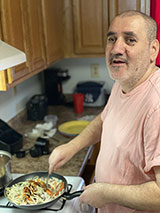
dsp7It’s Direct Support Professionals Recognition Week! We are proud to celebrate CAU’s 602 DSPs for the talent and dedication they bring to assisting members in living life to the fullest. 

DSPs offer specialized support to increase independence. They may meet medical and behavioral health needs, provide personal care, assist with mobility, and teach social, workplace and daily living skills. 

dsp3We want to acknowledge the amazing work DSPs do with a small fraction of the recognition they deserve throughout the year. In August, we were pleased to host our first Staff Appreciation Day and distribute prizes to our winners. The contributions and accomplishments of our DSPs do not go unnoticed, especially considering the additional challenges and changing regulations caused by the pandemic. 

CAU staff have recognized the hard work and outstanding commitment of DSPs with some of the following messages: 

“Daryl [Williams] ensured that members remained active within the program during the time of quarantine” wrote Linda Woodard. “He came up with group exercises and activities the members appeared to enjoy and looked forward to participating in…the members of the program remained happy and active and interacted with others  at a time when the pandemic and quarantine could have caused them to become depressed and withdrawn from others.”

Rashidah Jenious praised DSP Starr Barr for assisting members to continue working toward their goals during the pandemic, including health goals by making nutritious meals and taking walks with members. 

dsp5

“Starr was relentless in her passion and dedication during the pandemic,” Jenious wrote. “She worked diligently covering vacant shifts as a result of staff resigning or going on leave due to fear.  She kept calm, was responsive to the members, and worked other programs if needed without complaining. She expressed support and concern with the members and was empathetic to their concerns for their own safety.”

Kizzy Calhoun wrote that Hind Iddrisu has had a positive effect on members and made sure they maintained friendships and relationships through the challenges of COVID-19 isolation.

“Hind downloaded Zoom to the members’ tablet so that they could continue enjoying church services,” Calhoun wrote. “Hind participated in the many CAU challenges that were created to keep the members engaged and occupied…Hind established time frames for the members to see their friends and families via Zoom.

Zulay Fundora said April Battle went above and beyond to get to know an individual at the Day Program and introduce new experiences to the member.

“April goes out of her way to teach him new things and is a strong advocate for his needs,” Battle wrote. “She assisted him in making calls to his family and friends via Zoom. To see the compassion and the ‘I won’t give up’ attitude she exhibits toward him is amazing.”

Happy Direct Support Professionals Recognition Week!

dsp1dsp2dsp4dsp6dsp9dsp8

In Remembrance of 9/11 and Colleen Fraser

memorial

memorial 3

memorial

Elizabeth residents gathered to remember and honor the lives lost on 9/11 this Saturday, with community dignitaries and residents attending a ceremony at the Midtown Pedestrian Plaza, where the city has a 9/11 memorial statue.

The ceremony opened with sirens at 8:46 a.m., in recognition of the first attack, and a moment of silence.

Among the six Elizabeth residents who died that day was Colleen Fraser, who served on the board of Community Access Unlimited.
Colleen is missed every day by those who knew and loved her. Colleen was well-known statewide as an advocate for people with disabilities. She was Executive Director of the Progressive Center for Independent Living and served
on the New Jersey Developmental Disabilities Council for more than 11 years. Colleen helped draft the Americans with Disabilities Act and advocated strongly for community living options for people with developmental disabilities.
In addition to her work at CAU, over her career she served as director of the Union County Office on the Disabled and as the director of D.I.A.L., another independent living center. She was a true hero, a champion for people with disabilities, and a good friend.
Watch video tribute:

colleen

colleenmemorialmemorial 2

What’s the Difference Between Supportive Housing and Transitional Housing?

Supportive Housing vs. Transitional Housing

Housing resources are available for those who need support for a variety of reasons, such as having a disability, chronic illness, drug addiction, mental illness, or facing homelessness. Supportive housing and transitional housing offer different options depending on the needs of individuals.

What is Supportive Housing?

Supportive housing is a type of affordable permanent housing that also makes use of support services for people with different special needs. For example, service providers can make sure people with disabilities or chronic illness manage their diet and medicine properly. Supportive housing does not have a limit on how long a person stays within the supportive housing setting. This type of housing aims to help people live more stable, productive lives. Supportive housing can help people with disabilities access better health care, assist seniors to continue living in the community, and help families in crisis stay together.

What is Transitional Housing?

Transitional housing is a space for adults or youth to live while searching for a more permanent home. Transitional housing may include support for addictions, mental health, or other issues. These accommodations are meant to bridge the gap from homelessness to permanent housing by offering supervision, life skills, support services and/or education and training.

Who Supportive Housing is for

Supportive housing is designed for people with developmental disabilities, people with mental illnesses, youth at risk and individuals with low-income housing needs. Each housing option reflects the needs and individuality of its members.

Who Transitional Housing is for

Transitional housing is a safe place for occupants to land and prepare for a permanent place to live. Transitional housing can serve people who need help after a crisis such as homelessness or domestic violence, or runaway or homeless youth.

youth shelter

How Supportive Housing Works vs. Transitional Housing

Eligibility and requirements vary for different providers and types of supportive and transitional housing. In New Jersey and many other states, dialing 211 helps direct callers to information and  services such as shelter and housing options, supplemental food programs, addiction prevention and rehabilitation programs and more. You can also search for services online through 211.

Where Can I Find Transitional Housing or Supportive Housing in New Jersey, and How Do I Apply?

Community Access Unlimited provides supportive housing for people with developmental disabilities and youth at risk. We also provide transitional and emergency housing for individuals with disabilities and youth at risk. Read about our housing programs and contact CAU to learn more. CAU transitional housing includes the Transitional Opportunities Program (TOP) for youth. TOP members may receive 24-hour supervised residential living, community services, daily living skills training, case management, advocacy and outreach, education, and drug and alcohol awareness education. Our housing programs are designed to meet the needs of individuals and help them achieve greater independence. CAU has emergency housing for a limited number of adults with disabilities and youth at risk, and provides additional services to runaway and homeless youth.

Celebrate Creativity at Arts in the Park

arts in the park

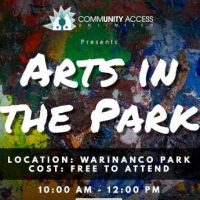
arts in the park All are invited to enjoy a summer day of arts and entertainment organized by Community Access Unlimited on Aug. 20 in Warinanco Park in Roselle.
Community Access Unlimited is seeking artists, musicians, singers and dancers to share their creative passions and participate in Arts in the Park from 10 a.m. to 12 p.m.

This free event is open for the community to enjoy. Arts in the Park will take place outside by the Warinanco Ice Skating Center, weather permitting.

Artists may feature displays of their work and musicians/dancers may perform for guests. This event is open to creative people of all abilities!

To learn more about participation, contact Jeanette Lebron at jlebron@caunj.org or 908-354-3040 x4205.

The Arts in the Park program is made possible in part by a 2021 HEART (History, Education, Arts Reaching Thousands) grant from the Union County Board of County Commissioners.

Advocates Recognize Disability Pride Month and the Anniversary of the ADA

" "
myrta

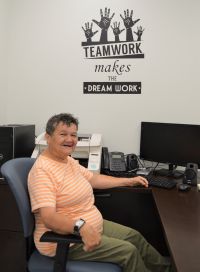
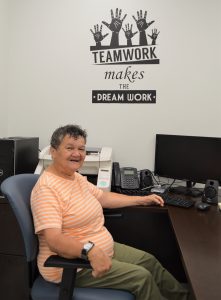
Myrta Rosa at work at Community Access Unlimited in Elizabeth

July 26 marked the 31st anniversary of The Americans with Disabilities Act of 1990- a landmark piece of legislation that prohibits discrimination against people with disabilities in several areas, including employment, transportation, public accommodations and access to government programs. July is also celebrated as Disability Pride Month.

Advocates at Community Access Unlimited are reflecting on how far they have come and the work still to be done for a more accessible world. CAU is a Union County-based, statewide nonprofit that strives to integrate people with disabilities and youth at risk into the community through comprehensive supports.

Myrta Rosa has been an advocate for over 10 years and is passionate about making sure people with disabilities have the same rights and opportunities as everyone else. Rosa is vice president of Helping Hands, one of the oldest and strongest self-advocacy groups for people with disabilities in New Jersey, and a CAU board member and employee.

“This gives us the opportunity to show “normal” people that people with disabilities can do things, and just because they have a disability doesn’t mean they don’t stop achieving in their lives,” Rosa said of Disability Pride Month. 

Helping Hands and the New American Movement for People with Disabilities, formed at CAU in 2012, have continued to meet virtually through the pandemic to discuss safety during the pandemic and key advocacy issues. Members also give presentations at local schools to educate on transitioning to services through the Division of Developmental Disabilities.

Rosa and member Annie Sims have testified to NJ Transit to report issues with accessibility and reliability in the Paratransit system. Rosa, who uses a walker, said she would also like to see more curb cuts by traffic lights for those with mobility and visual impairments.

advocacy event

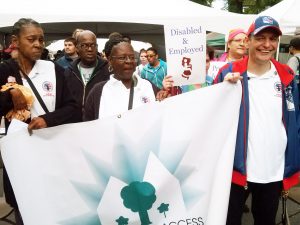
Annie Sims, center, at an event with members of NAMPD

Sims said that one of the most important things she does is encourage individuals with disabilities to advocate for themselves. 

“I didn’t know what self-advocacy was until I came in every Tuesday and saw people standing up for themselves 10 years ago,” Sims said.  

Sims and Rosa agree that “disability” is not a word they like to use in their lives- and that everyone should be respected for their differences. 

“You still have a strong mind a strong heart…you’re not [disabled]- you’re still normal,” Sims said. 

Rosa added that as our aging population grows, more people will need accommodations because of new disabilities, and we need to be ready to make life accessible for people. 

“I would like to see the word “disability” changed to “different abilities” because there are a lot of different abilities, not just one, so we can be respected the way we should,” Rosa said.  


ACE is Back! Join us in Roselle for Continuing Education

There is no such thing as “one size fits all” when it comes to education. For adults with developmental disabilities who are looking to continue their academics and job skills training, CAU offers an alternative to traditional day programs. 

The new Academy of Continuing Education location opened July 6 in Roselle and offers a variety of options to appeal to every type of student, including recent graduates and older adults. The current hybrid schedule includes virtual and in-person groups this summer so members may choose the option that is right for them.

ACE is reopening after providing virtual services through the pandemic; the new Roselle location offers plenty of space for social distancing, group learning and activities.

“We’re very excited and the members are very excited,” said Stacy Marshall, assistant executive director of educational services. “You can’t replace what it’s like to be face-to-face in a shared space with other people. For some, it’s going to be like a cloud is lifted.”

Student Dianna Simms, 30, has attended ACE since 2014 and took virtual courses in math, reading, music, and visual and digital art.

“I wanted more education,” said Simms, who said she likes to encourage others to continue their education on social media.

Simms has a vision impairment and said she appreciates that teachers have worked with her to compensate for that, such as setting her up with a screen reader to enlarge worksheets.

Although she was able to continue her education at home virtually, “I would rather see my friends and my teachers in person,” Simms added.

ACE courses include topics in reading, math, science, music, art, computers, self-help and more. The academy promotes learning through hands-on activities, and students gain skills that can be applied in developing career interests. ACE is a NJ Division of Developmental Disabilities-qualified program offered by Community Access Unlimited. CAU is a Union County-based, statewide nonprofit that works to integrate people with disabilities and youth at risk into the general community through comprehensive supports.

The academy is flexible to allow students to pursue as many courses as they choose and balance their studies with outside activities such as employment or athletics. Many members are employed, and many engage in community programs such as theater or the Special Olympics.

Marshall stressed that individuals with disabilities and families need to start learning about their post-graduation options as early as possible to start planning for a successful future. A new NJ law extending eligibility for the state’s special education program due to the pandemic is a step in the right direction.

“I think in New Jersey attention to special education has been lacking for some time,” Marshall said. “In some ways [the pandemic] deepened that divide and in some ways it increased visibility..I think it’s now on folks’ radars that we can and should do better.” 

Families and individuals interested in learning more about ACE can reach out to CAU at 908-354-3040 to request a virtual tour and overview of the program.  

Spring 2021 Independent Citizen is Here!

walk 2020

newsletter crop The Spring Independent Citizen is here! Our newsletter is filled with agency updates, member stories and information about upcoming events.

What’s Inside:

  • Join us for Walkathon! The Annual Ira Geller Walkathon is June 21-26!
  • CAU Recognizes Autism Acceptance Month. Hear from CAU staff and a member about setting and achieving their goals.
  • CAU works with Amazon. Read about our partnership with Amazon to support jobs for people with disabilities.

View/Download The Independent Citizen

Get Ready for the Ira Geller Walkathon!

walkathon 2020 people waving

walkathon flyerHop on a treadmill, go to a local park, or walk or run in your neighborhood to support services for people with disabilities and youth at risk in New Jersey!


The CAU virtual Ira Geller Walkathon runs the week of June 21-June 26. On June 26, individuals living near Warinanco Park in Roselle are invited to walk or run in the park.

Click here to register! (Sorry, this link no longer works)

Walker or runner tickets are $30 and include a Walkathon t-shirt & race bib. 

All event proceeds will support CAU programs serving more than 3,000 individuals and families in New Jersey, including housing, academics, employment training, day program and support services for people with disabilities and youth at risk. These programs serve the agency’s mission to create an all-inclusive, accessible world where everyone can lead a fulfilling life as part of the greater community.

CAU’s annual Walkathon is named in memory of Ira Geller, a CAU member known for his advocacy for people with special needs who worked tirelessly to raise funds for the agency.

walkathon 2020 people waving

Walkers and runners are encouraged to invite friends, family and coworkers to join them virtually in the Walkathon June 21-26. Run or walk a route of your choosing and share your success on social media using #CAUWalk2021. When you’re done, make sure to submit your photos to sthana@caunj.org for a chance to win a prize! Prizes will be awarded for: most dollars raised, best team photo and most creative challenge.

Thank you to event sponsors 9Sail, HBK, Meeker Sharkey & Hurley, and Epstein Becker & Green, P.C.!

 Learn more about supporting the agency and become a monthly donor at www.caunj.org/support-us/.

Tagged with: , , , ,

The PACES Newsletter is here!

newsletter

paces post newsletter previewCheck out the inaugural issue of The PACES Post, the CAU PACES program’s new quarterly newsletter!

This newsletter features important news, upcoming events, and a celebration of members’ achievements.

The Pathways to Academic and Career Exploration to Success (PACES) program supports youth in foster care, ages 16-21, in their successful transition to and retention in post-secondary education, career technical education and workforce readiness.

Our devoted coaches are supportive adults who assist youth with 1:1 meetings and assessments to create and implement plans for education/employment success. Coaches guide youth to self-advocate by utilizing social networking and professional communication skills to coordinate with and leverage local and state-wide support systems and resources.

Referrals for PACES are accepted through Essex County and Union County DCP&P and DCF.

Teachers and Students Strive for Success During Autism Acceptance Month

kyzier

Michael Adamowsky says he didn’t plan it, but he has found his purpose in life through teaching.

teacher

Michael Adamowsky is an educational specialist at CAU.

After completing his master’s degree in accounting and starting a career at Community Access Unlimited, Adamowsky found that the accounting position didn’t suit him, and he didn’t like sitting at a computer all day. He decided to become more directly involved in the mission of CAU, to integrate people with disabilities and youth at risk into the community through comprehensive supports.

Now, Adamowsky is an educational specialist at the CAU Day Program, where he leads groups in a variety of subjects and gets members involved in different activities. He also assists at the Academy of Continuing Education, CAU’s answer to post-graduation learning for adults with developmental disabilities.

As a person on the autism spectrum, Adamowsky said he is able to relate to his students with disabilities in a unique way. 

“I want to be a role model for them,” Adamowsky said. “I want to be someone they can look up to.” 

This April, The Autism Society of America is making a shift to celebrating Autism Acceptance Month, previously known as Autism Awareness Month. The campaign is designed to celebrate differences and increase awareness of the signs, symptoms, and realities of autism.

Adamowsky said he wants to give members all the support they could need or want to succeed in their Day Program groups. He also wants people to know that having a diagnosis does not mean a person can’t excel in their studies and be successful.

“I received ‘normal’ schooling through life; because of my autism I just had a little help along the way,” Adamowsky said. He was named hardest working student in his class, was inducted into multiple honor societies, and went on to achieve his master’s degree.

Adamowsky brings the same passionate energy to his online learning groups as he did in person at Day Program. 

“That’s basically the cornerstone of this whole thing,” he said. “I feel like the teacher has to be just as involved and enthusiastic as the members are, because if the teacher isn’t able to teach, how will the students be able to learn?”

“He’s a great example to our members and members who are striving to work,” said Onekia Grier, managing assistant executive director of Day Habilitation and Educational Services. “He does such a great job with teaching, there is a waiting list for members to get in his groups.”

Adamowsky said he is carefully planning syllabi for groups like math and science, poetry writing, and financial literacy for the return of in-person Day Program services when the program reopens under state COVID-19 guidelines.

“I see what’s on the inside and what they’re capable of doing,” Adamowsky continued. “A lot of the members have told me that’s why they love me, because I’m able to see past their disability and they haven’t had interactions with other people that are the same.” 

kyzier

Kyzier Davis is a student and new member at CAU.

CAU members with autism can benefit from a variety of supports, from Day Program to behavioral support to employment training, depending on their needs and goals.

Kyzier Davis is a new CAU member who is excited to graduate from high school in June. 

“I have support from my staff, social workers and teachers,” Davis said.

Davis said he is not sure what he wants to do after he graduates, but he is focused on coping and life skills with the help of CAU behaviorists and his residential program staff. Exercise has been one of the most beneficial ways to help regulate his emotions. 

“Even if I have good days and bad days, I do pushups every day,” Davis said. “I feel relief and calm from exercise.”

Davis, 21, said he is concentrating on managing his behavior in public by expressing himself at home. That includes drawing and writing down his feelings in a journal. One goal he has is to one day see himself on TV.

“I’ve had a lot of good days so far…I had a great March,” Davis said of his time with CAU.

Adamowsky said he hopes that people with autism never limit themselves in life. 

“I really hope that autistic people are not afraid to be themselves,” he said. “There is a purpose in life for everyone; no matter what kind of person you are there’s a pot of gold waiting for you at the end of the rainbow if you’re just willing to find it.”