The Ira Geller Walkathon is going virtual this year to raise crucial funds for services that support people with disabilities and youth-at-risk in a safe and social distance-friendly event.
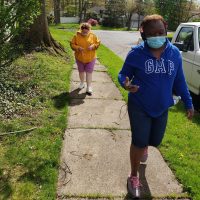
Community Access Unlimited invites members of the community to walk, jog or roll in their neighborhoods or parks in the Ira Geller Virtual Walkathon on Sept. 12 from 12 p.m. to 2 p.m.
Supporters around New Jersey are encouraged to represent CAU with an afternoon full of fun wherever they choose to walk! Registration and fundraising online for the Walkathon is easy!
Click here to get started! (Sorry, this link no longer works)
Walkers will track their progress on the Nike Run Club app and can fundraise as an individual or team. Participants are encouraged to wear a CAU shirt if they have one and share their walk by tagging CAU in pictures on Facebook and Instagram.
The annual Walkathon is named in memory of Ira Geller, a CAU member who worked tirelessly to raise funds for the agency and its support and services for people with disabilities, and who was known for his commitment to people with special needs.
As vital services like those provided by CAU continue through the unprecedented COVID-19 situation, the organization is working to meet growing and changing needs. Donations will help cover these unexpected expenses and support the safety and wellbeing of members and staff. Make a donation to CAU and learn more at: www.caunj.org/support-us/.
“There is still a cause that we serve and raise funds for, especially at this time when all our events have been cancelled due to COVID-19,” said Saranya Thana, director of fundraising. “Something as small as ten dollars can go a long way, so whatever anyone is able to give, please share that you donated with others.”
CAU members have been spreading the word to let everyone know the Walk will be virtual this year, said member Gary Rubin.
“Even though it’s virtual, it’s important that people participate because it benefits what the agency does for us – it’s a fundraiser that helps us as individuals, so the more fundraising the better,” Rubin said.
Sponsorship opportunities are available for businesses and organizations. To become a sponsor or to learn more about these opportunities, contact Saranya Thana at SThana@caunj.org.
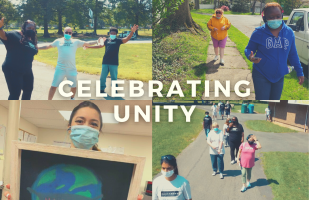
The COVID-19 pandemic is straining resources for programs serving runaway and homeless youth that were already in short supply prior to the crisis. The primary causes of homelessness among youth are family conflict or severe economic hardship, making these programs more critical than ever to ensure young people who need aid do not slip through the cracks.
Youth programs at Community Access Unlimited transform lives and are comprehensive to meet individual needs. From emergency housing to semi-independent and supported housing, CAU ensures that members have a safe home as well as training and education to prepare them for a stable, self-reliant adulthood. Services also include crisis intervention, counseling, recreation services, and leadership and advocacy opportunities.
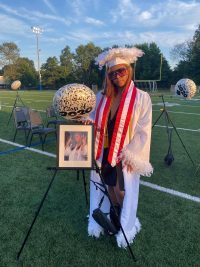
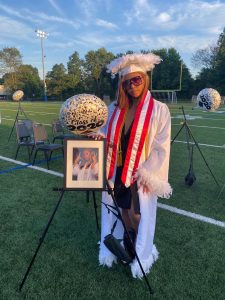
Natalie Flores, 18, is one Community Access Unlimited Transitional Opportunities Program member who is celebrating her accomplishments this year. A 2020 graduate of Essex Valley School, Flores is class president and salutatorian, and was excited to deliver her speech in an in-person graduation ceremony on Thursday.
“Coming from a challenging environment and not having a typical support system was a struggle,” Flores told her classmates. “To start high school and fail all your classes and then to graduate with a 3.6 GPA and be a member of the National Honor Society and be salutatorian is a tremendous accomplishment because I myself had doubts about my own success.”
Flores will attend Union County College in the fall and plans to major in education to pursue her goals of teaching math to children in a juvenile correctional facility.
“I’ve been there and I want to make a change, I want to help another kid out,” Flores said. “I want to set up my own program where I try to get kids off the streets and put them in their books. I want to help them focus in school and be ready.”
“[My staff] have seen my growth and how difficult it was,” she added. “They kept trying to lead me in the right direction. They were guiding me in telling me what the real world is out there. They also taught me about credit and budgeting.”
Homeless youth face particular risks during this time. An average of 25 percent of youth accessing runaway and homeless youth programs have a chronic or pre-existing health condition like diabetes, asthma or HIV, according to a recent survey of programs coordinated by the Coalition for Homeless Youth. Youth living on the streets are also at high risk for victimization and assault, mental illness, substance misuse, juvenile justice system involvement, and human trafficking, all of which increases the likelihood of perpetuated homelessness in adult life.
CAU youth programs include the Transitional Opportunities Program (TOP) which provides comprehensive residential services to youth ages 13 to 21, as well as the Union County Youth Shelter and federal Runaway and Homeless Youth Basic Center Program and federal Transitional Living Programs. These programs provide safe shelter and supportive services that address the experiences and needs of these youth to mitigate their risks and put them on a better life outcomes trajectory.
Youth enrolled in the TOP day program participate in an employment training workshop, a GED program, or volunteer job practicum for a minimum of 30 hours per week. TOP members may receive 24-hour supervised residential living, community services, daily living skills training, case management, advocacy and outreach, education in accordance with the NJ Approved Life Skills Curriculum, and drug and alcohol awareness education.
Eligible youth can become a Community Access Unlimited TOP member by referral through the New Jersey Division of Child Protection and Permanency, Children’s System of Care, referral by local schools, community organizations or local agencies, faith-based organizations, hospitals and medical offices, self-referral, or by anyone encountering a youth seeking shelter or assistance.
30th Anniversary of the ADA: The Fight for Disability Access Continues
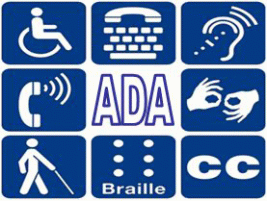
The civil rights movement for people with disabilities reached a landmark on July 26, 1990 with the passing of the Americans with Disabilities Act. On its 30th anniversary, people with disabilities are celebrating hard-earned victories and are speaking up about the work still to be done and recognizing the historic law intended to prohibit discrimination against individuals with disabilities in all areas of public life.
Gary Rubin became a member of Community Access Unlimited in 1990, then known as the Association for the Advancement of the Mentally Handicapped- Union. Rubin experienced chaotic living arrangements and mistreatment living in state-run institutions in the 1980s, and quickly became involved in the Helping Hands advocacy organization, one of the oldest and strongest advocacy groups for people with disabilities in the state, when he joined CAU and began living in a residential program. He became president of Helping Hands and was a founder of the New American Movement for People with Disabilities (NAMPD).
“Before the ADA, you were no one if you had different abilities,” Rubin said. “I was one of the people who made sure it went through, and afterward we talked to people. You don’t want a law to come out and people to take advantage of it. They need to comply.” Today, Rubin lives on his own, works and remains an engaged disability civil rights activist.
According to Belinda Malave, another CAU member and advocate, the ADA has become frustrating, because the law is not taken seriously by everyone and too often, little is done to ensure compliance and accountability.
“We have work to do – we have a long way to go as far as the Americans with Disabilities Act,” Malave said. She cited difficulties accessing buildings in her wheelchair and discrimination she has experienced in the workplace as a telemarketer. “There are lots of places still not accessible or discriminating 30 years later. There is no reason for any new building not to be accessible because of the ADA.” Malave has been a longtime, vocal and highly active self-advocate and a strong advocate on behalf of people with disabilities at the system level.
Societal attitudes about people with disabilities began changing in the 1960s with the deinstitutionalization movement. As the rights of people with disabilities were slowly recognized and advanced, thousands of state centers housing people with disabilities and people with mental illness, with support from organizations like Community Access Unlimited, were transitioned to become included, participating members and residents in communities. The ADA was modeled after the Civil Rights Act of 1964, which prohibits discrimination on the basis of race, color, religion, sex, or national origin – and Section 504 of the Rehabilitation Act of 1973. Signed into law by President George H.W. Bush, the ADA expanded disability rights beyond federally funded spaces with the intention that people with disabilities could no longer be denied access to jobs, school, transportation, or to public places.
At the signing of the ADA, President Bush gave an impassioned directive, now famously part of the legacy of the ADA: “Let the shameful walls of exclusion finally come tumbling down.”
Helping Hands, founded at CAU in 1984, and the NAMPD, founded in 2012, continue to advocate for the needs of people with disabilities in the United States and empower them to advocate for themselves.
“We want to talk to the governor on Zoom about job opportunities and what’s happening with this virus,” Rubin said. “With the virus going on things are really changing. And it’s people like us who are affected by it.”
Malave has been communicating with people with disabilities by phone to make sure their needs are met while quarantined, she said. Rubin said he is concerned about COVID-19 policies restricting the independence of people with disabilities.
“The ADA has a way to go and we need to do a little bit better,” Rubin said. “We need to do something so we can prevent just being seen but not heard from…I don’t want to feel like that in the 21st century.”
Gary Rubin is president of Helping Hands advocacy organization and a member of CAU.
Belinda Malave is a longtime advocate for people with disabilities and member of CAU.
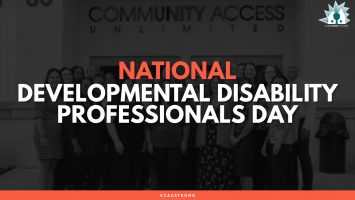
A Tribute: July 15 is National Developmental Disability Professionals Day
Developmental disability professionals make sure that people have access to the supports and resources they need to live full, self-directed lives. They go by different names based on their specialized areas of service – Direct Support Professionals (DSPs), Support Coordinators, Behaviorists, Nurses, and other Program Support Staff.
Collectively, they provide residential services, create employment opportunities, serve as behavior analysts, coordinate medical and other services, and much more. A DSP may provide supports to a person with a disability at home, work, school, church, and other community places. Developmental disability professionals are advocates for the individuals they serve, communicating their needs, wants and goals. They also encourage attitudes and behaviors that enhance community inclusion.
Here in 2020, developmental disability professionals have stepped up to meet the demanding challenges of the COVID-19 pandemic to provide vital, continuous services. CAU’s professionals are currently serving 350 people with developmental disabilities and youth-at-risk living in 60 quarantined residential programs throughout Union County, NJ, with another 700 individuals and families served in the community. With the help of our developmental disability professionals, CAU is offering our day habilitation, employment and other services on virtual platforms making sure that vital direct services continue despite temporary program shut-downs associated with the pandemic.
The term “essential workers” has taken on a new meaning among those who understand the truly essential work of the many professionals supporting people with developmental disabilities. At CAU, we have witnessed our developmental disability professionals rise to the unprecedented demands of the pandemic. They are wearing masks, using protective equipment and continually sanitizing while also providing comfort, companionship and opportunities to grow. They are tirelessly creating and implementing new daily activities to keep up the mental and physical well-being of our members living in quarantine whose lives, like most everyone’s, have been so dramatically disrupted.
So today, we at CAU recognize, with deep appreciation, each one of our hundreds of developmental disability professionals and the contributions of each and every one of them.
We appreciate your dedication, skill, adaptability, flexibility and sacrifices!
We thank our CAU developmental disability professionals, and developmental disability professionals throughout the country, for your part in advancing the rights of people with developmental disabilities.
The sounds of different genres of music are as loud as ever this summer, even as most listen to music at home instead of a concert hall. Everyone with an internet connection is invited to listen in together for a week-long virtual concert benefiting Community Access Unlimited from July 6-11.
“It will be a week of nights of music that we hope everyone will get entertainment out of while we are stuck at home, with the added good cause of raising money for CAU,” said Saranya Thana, fundraising and events coordinator at CAU. “Our artists all have different vibes to their music to cater to everyone’s tastes.”
CAU is a statewide nonprofit that strives to integrate people with disabilities and youth at risk into the general community through comprehensive supports.
From folk-country singer Jesse Lynn Madera and alternative pop singer Sara Ontaneda to handpan artist Dan Mulqueen and jazz guitarist Juan Mungia, a diverse selection of music will be showcased on theCAU Facebook pagestarting at 7 p.m. each night. Singer Chrissie Limos and electronic artist Matt Pelosi round out the lineup to offer variety for everyone listening.
Those who tune in are encouraged to donate what they can to CAU to support the agency’s ongoing essential services. From support coordination to behavioral services, the agency has built out remote operations wherever possible and invested in Personal Protective Equipment for staff and members. Essential staff who work directly with people with disabilities and youth at risk continue to support members on a daily basis.
Madera, who lives in Nashville, said was happy to to donate her talent for the benefit concert and hopes listeners find her music hopeful.
“I really love to perform live and I’m not sure how it will translate over the internet, but I really enjoy connecting with people and I hope my music brings some hope to people and some strength when they’re confronting big emotions,” she said. “I like to write about things that are kind of difficult.”
New York City-based jazz guitarist Juan Mungia added that he was eager to share his music with new people online.
“I hope people can enjoy the music and forget the whole situation of the world for a while,” he said. “For me thats the whole idea od being an artist is to be able to give people an outlet to have a good time. For me I just like to see people happy.”
New York City-based Sara Ontaneda sings in both English and Spanish with a fusion of pop influences. She said she hopes her music will bring listeners peace during these difficult times.
“I’m more than happy to share my music for a great cause,” Ontaneda said.“I believe that everyone should have equal opportunities to live their best life. I really like what CAU stands for and I believe in the work they do.”
Want to Support Social Services in New Jersey? Complete the 2020 Census with CAU!
We’re highlighting social services in New Jersey and how the Census impacts them!
The federal government uses Census data to allocate resources to state governments- more than $45 billion dollars a year in New Jersey. People with disabilities have been identified by the Census Bureau as a hard to count population, meaning they are more vulnerable to being missed in the decennial Census.
The Census helps guide funding decisions that affect the services, amenities and resources people with disabilities and their families need to enable them to participate and contribute fully in their communities. Currently, 61 million American adults live with a disability, and roughly 1 in 7 children are affected by a disability. Census data can also inform funding for New Jersey’s nonprofit organizations, which provide important care, assistance, grants and programs that supplement government services.
For every 100 people not counted, a community loses an estimated $1.2 million annually in federal funds for programs such as Medicaid, social services block grants and vocational education. Decisions about a foundation or nonprofit’s focus and investments may depend on how federal funds are distributed and what remaining community needs exist. Demographic data from the Census also helps to shape most of the other federal data surveys, which help inform grants and goals for NJ nonprofits.
Our social services are going to be more important than ever for our residents as our state recovers from COVID-19.
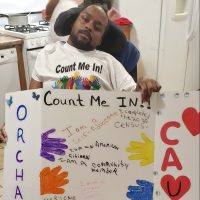
CAU members and people with disabilities across New Jersey are saying Count Me In the 2020 census! Thank you for joining us at our training webinars to learn more about the Census as we strive to complete the count!
We launched a Census Day Challenge on April 1, with members sharing videos and photos announcing their success and excitement in completing the Census!
“My needs matter—I completed the 2020 Census!” announced member Jalisa Smith in her video.
CAU is sharing a resource page with its members, staff and the wider community to help answer any questions you have about the Census. You can also email us at census.info@caunj.org – We would love to help!
“We want to encourage people with disabilities to stand up and be counted and be full participating citizens,” said CAU organizer Bill Webb. “It’s critical for us to be doing it because New Jersey’s overall count was underrepresented in 2010.”
Now is the time to get involved because, otherwise, undercounted communities will miss out for the next 10 years. Join us and #FillItOut!
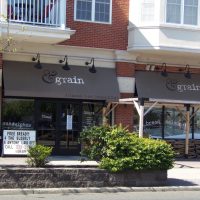
&grain, a restaurant in Garwood, has joined Rally for Restaurants thanks to CAU members
With New Jersey now in its eighth week of state-mandated stay-at-home restrictions and all restaurants and bars closed to diners, eateries across the state are suffering mammoth losses in income. Restricted to selling take-out orders only, New Jersey restaurateurs are fighting to hold on until the lockdown is lifted. Celebrity chef Tom Colicchio predicted up to 75 percent of the nation’s restaurants might never again reopen their doors.
Locally, six CAU members are giving their time to help local restaurants stay afloat as part of a national movement called Rally for Restaurants™, an effort to promote local eateries and encourage the public to order take-out food and buy gift cards while spreading the word about their favorite restaurants through social media.
Several weeks ago the Gateway Regional Chamber of Commerce, which is coordinating the local Rally for Restaurants effort, issued a chamber-wide request for volunteers to make calls to area restaurants encouraging them to enroll in the Rally for Restaurants program. Sandra Lynch, CAU’s assistant executive director of employment services, thought employed agency members who were not able to work due to the state shutdown were the perfect candidates. CAU also opted to pay them to make the calls.
“They love it,” Lynch said. “It takes their mind off the complacency and boredom of being home all the time. Their immune systems are compromised so they never leave their home. This gives them a chance to talk to people while also working on their phone skills and efficacy. They continue to work with their job coach and it gives them the chance to help the community.”
After brief training, the six CAU members jumped right in making calls to area restaurants, according to Lynch. The intent is to educate the eateries about the Rally for Restaurants movement and encourage them to enroll in the program and then send out emails and social media messages to their contact lists asking for their support.
CAU member Gabby Arogano is enjoying making the calls. She said she was nervous at first but when the first three restaurants she called signed up, she started to feel really good.
“I felt really proud of myself that I was able to help them,” she said. “If I ever needed help, I would want someone to help me. When I first started it was a bit of a test. I had to look at it as, ‘Now you’re a telemarketer.’”
While all volunteers are given a script by the Gateway Chamber, Arogano prefers to use her own words.
“I tell them, ‘Due to the pandemic we know you’re struggling and we can put you in this directory that makes it easier for people to find you and keep your business open,’” she said. “It’s a no-brainer.”
CAU member Megan Modero tries to make a few calls every day.
“I try to work at it,” she said. “I also like helping the restaurants. People want to go out for dinner and have their family time. So by helping these restaurants to stay open I’m also helping the community.”
Collectively the CAU members have made more than 150 calls to restaurants encouraging them to enroll in the program, according to Lynch.
Eric Nowoslawski, director of special projects at the Gateway who is coordinating the chamber’s Rally for Restaurants effort, is thrilled by the response of the CAU members.
“They’ve gone above and beyond,” he said. “The Community Access Unlimited members alone accounted for nearly a third of our 500 calls made. They’ve been enthusiastic and shown real initiative. We can’t thank them enough.”
Community Access Unlimited is responding to help meet the needs of its members with disabilities and youth at risk by launching a fundraiser with a goal of $25,000 to support its new operations and COVID-19 safety measures as a provider of essential services across New Jersey.
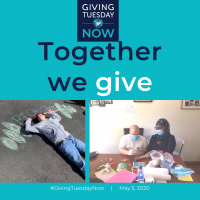
#GivingTuesdayNow is a new global day of giving and unity that will take place on May 5, 2020 – in addition to the regularly scheduled Dec 1, 2020 #GivingTuesday – as an emergency response to the unprecedented need caused by COVID-19.The day is designed to drive an influx of generosity, citizen engagement, business and philanthropy activation, and support for communities and nonprofits around the world.
CAU has mobilized to respond to the needs of its community with new technology-based tools and services to help individuals and families with special needs thrive during the pandemic. The agency has incurred substantial costs in purchasing thousands of pieces of personal protective equipment to protect members and staff and in building and offering remote operations.
You can support CAU on #GivingTuesdayNow by donating to and sharing the agency’s Facebook campaign. Donations can also be made at caunj.org/support-us/.
One in four American adults has a disability that seriously impacts their life, according to the Centers for Disease Control and Prevention, and more than 4 million people with a disability have an independent living disability with difficulty doing errands alone. CAU is positioned as a top provider and leader in offering these new and sustainable solutions as new ways of working and serving continue to unfold as quarantining ends.
“The support of our community on #GivingTuesdayNow will help CAU continue to move forward in these unprecedented circumstances as we serve people with special needs in New Jersey,” said Bernadette Griswold, CAU executive director. “We are thankful and heartened by the ways our community has contributed thus far, from donations of PPE to other supplies that have improved our members’ days at home.”
At a time when we are all experiencing the pandemic, generosity is what brings people of all races, faiths, and political views together across the globe. Generosity gives everyone power to make a positive change in the lives of others and is a fundamental value anyone can act on. It’s a day for everyone around the world to stand together and give back in all ways, no matter who or where we are.
Did you know that many CAU services are available remotely? Our vital programs and services are still active and going strong.
CAU is a provider of essential services that will continue to be delivered throughout the pandemic. Our direct support staff will continue to provide on-site supervision and support 24 hours a day, every day. CAU has remained diligent in continually securing and disseminating personal protective equipment and gear to enhance COVID-19 preventative measures.
Call us at (908)354-3040 or email info@caunj.org to learn more about:
Let’s work together to create the perfect Individualized Support Plan for your family! Our coordinators are knowledgeable about your community and are trained in person-centered planning.
Choose courses in math, reading, media, science, art, self help and history! ACE is our answer to post-graduate learning for adults with developmental disabilities.
Our approach works to increase positive behaviors and create lasting outcomes. We can complete behavioral assessments and develop and implement structured behavioral modification plans.
Whether you or your loved one needs assistance communicating, navigating their environment, or overcoming other challenges, our AT supports can help individuals and families achieve a better quality of life.