Español

What Changes to Medicaid Could Mean for People with Disabilities

What Changes to Medicaid Could Mean for People with Disabilities

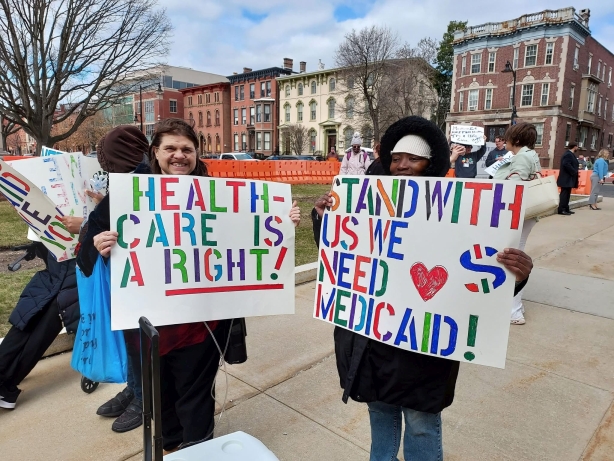
Two Self Advocates hold up signs saying: HEALTH-CARE IS A RIGHT! (Right is underlined) And STAND WITH US WE NEED MEDICAID!

Two Self Advocates hold up signs saying: HEALTH-CARE IS A RIGHT! (Right is underlined) And STAND WITH US WE NEED MEDICAID!

For many people with disabilities, Medicaid goes far beyond health insurance. It provides the services and support that help people live independently, work productive jobs and be active members of their communities.

In New Jersey, Medicaid is provided through NJ FamilyCare, which covers more than 1.8 million residents. Coverage can include critical home- and community-based services, or HCBS, that support independence and help people remain in the places they know and love.

That is why significant changes to Medicaid at the federal level needs our attention.

The federal budget reconciliation law enacted in 2025 includes major changes to Medicaid, some of which will begin affecting NJ FamilyCare members this fall, with additional requirements taking effect January 1, 2027.  That’s when certain adults (ages 19 to 64) will be required to meet new “community engagement” requirements to maintain NJ FamilyCare coverage, which can include working, attending school or volunteering. Many of those members will also need to renew their coverage every six months instead of annually.

Some people with disabilities enrolled through other Medicaid eligibility categories may qualify for an exemption if a disability or serious health condition makes it difficult to meet the requirements.

Even if many people with intellectual and developmental disabilities are not directly affected by the new requirements, the broader changes to Medicaid matter to our entire community.

Medicaid funds HCBS which help people with disabilities to live more independently. In New Jersey, those services include the DDD Supports Program and Community Care Program.

There is also concern about the broader impact that reduced federal Medicaid funding and the increased strain on the system could have on HCBS, eligibility and enrollment, provider reimbursement rates and the direct-support workforce.

At Community Access Unlimited, we know what those services mean in people’s everyday lives. For members and families, the most important thing right now is to make sure your contact information with NJ FamilyCare is current, and then watch for letters, emails or texts from either NJ FamilyCare or your health plan, and respond promptly when information is requested. Members should continue to apply for or renew coverage even if they believe the new rules may affect their eligibility.

And there is one particularly simple step that can make a big difference: open your mail. If NJ FamilyCare asks for additional information, respond as soon as possible to help avoid a gap in coverage.

As these changes are implemented, CAU will continue to follow their impact, share important information with members and families, and advocate for access to the services and support people with disabilities need to live independently.

There will be more information in the months ahead. For now, stay informed, pay attention to communications about your NJ FamilyCare coverage and ask for help if you are unsure how the changes apply to you.
The Excitement…and Adjustment…of Going Back to School

For a lot of families, September means new backpacks, new schedules and a return to a familiar fall routine. For individuals with disabilities and their families, this time of year can also come with a lot of anxiety.

Change is hard for a lot of kids, but it can be especially hard for children with disabilities who rely on predictable routines to feel safe and confident. A new teacher, a new classroom, a new bus route or a new set of expectations can bring up real anxiety. For a child who has spent the summer with looser days and familiar surroundings, the sudden return to bells, schedules and unfamiliar faces can feel like a lot all at once. It’s easy for many of us to underestimate how much emotional work goes into that adjustment.

It’s why adjustment periods deserve patience. A child who seems more withdrawn, more prone to meltdowns, or more resistant to routine in the first weeks of school shouldn’t automatically be labeled as regressing. They may just be adapting. The families and educators who recognize that, and take it into consideration, tend to see kids do better and have more positive experiences.

And that’s really an important piece of this time of year to remember.  Alongside the adjustment, there’s so much for kids to look forward to. New routines bring new chances to build skills, make new friends and discover things about themselves. What’s better than seeing a child walk into a new classroom nervous and unsure, and within a few weeks, light up talking about a friend they made or a subject they’re suddenly excited about? That shift, from apprehension to genuine enthusiasm, is one of the most rewarding things to witness each fall.

The best thing we can do is make space for both the apprehension and the excitement. A little extra patience in the first few weeks can lay the foundation for real growth in the months that follow.

So if the child in your life seems a little more anxious this time of year, that’s okay. Back-to-school season asks a lot of kids. But it we understand that, it can also give all of us so much to look forward to.

Home Is Where Independence Grows

When people think about independence, they often picture someone doing everything on their own. But that’s not what independence looks like, not for the people we support and not for any of us.

The truth is, none of us achieves independence alone.

We all rely on family, friends, neighbors, technology and our communities in different ways. The support we receive doesn’t make us less independent,  it gives us the confidence and opportunity to make our own choices, pursue our own goals and live the lives we choose. That’s the philosophy that guides our approach to housing at Community Access Unlimited.

For most of us, home is much more than a physical space. It’s where we feel safe. It’s where we celebrate holidays and milestones, share meals with the people we love, and find comfort after a long day. It’s where we build relationships, make memories and simply have the freedom to be ourselves.

Everyone deserves that sense of belonging. Yet for many people with disabilities, finding a home that offers both independence and the right level of support can be a huge challenge. That’s why housing has always been one of the cornerstones of CAU’s mission.

Today, CAU offers nearly 60 residential programs, including group homes, supervised apartments and other supportive living options. Each is designed to meet people where they are, recognizing that independence looks different for everyone.

One of the greatest privileges of my work is witnessing people discover what’s possible when they have a place to call home. I’ve seen individuals arrive at CAU uncertain about what the future might hold. Over time, I’ve watched them discover confidence, make friends, find employment, learn new skills and begin making decisions that shape their own lives.

As the needs of our community continue to evolve, so do we.

Our Emergency Capacity Housing program recently expanded into Scotch Plains and has now supported more than 300 individuals experiencing housing crises. More than 120 of those individuals have chosen to remain part of the CAU community after receiving services, continuing their journey toward greater independence and stability. More importantly, the program has given hundreds of people a safe place to regain stability, reconnect with support, and begin planning for the future.

We’ve also opened two new medical homes through funding provided by the New Jersey Division of Developmental Disabilities after recognizing a critical need for individuals transitioning from nursing homes. These homes allow people to receive the medical support they need while living in a comfortable, home-like environment that promotes dignity, choice and quality of life.

We’re also embracing smart-home technology that gives residents greater control over their daily lives. Voice-activated Alexa devices, automated roller shades and other innovations help people complete everyday tasks more independently, making it easier to navigate their homes with confidence, safety and dignity.

Every new home we open, every thoughtful support we provide, and every innovation we embrace is guided by the same belief that everyone deserves the opportunity to live with dignity, make their own choices and feel at home in their community.

And a home provides so much more than a place to live. It’s a place to belong.

Celebrating 15 Years of Inclusion Through the Arts

At Community Access Unlimited, we believe everyone deserves the opportunity to express themselves, share their talents, and be part of something bigger than themselves. For the past 15 years, the CAU Community Players have done exactly that.

Each year, our performers take the stage to entertain audiences, and beautifully demonstrate what true inclusion looks like. They build friendships, gain confidence, learn new skills, and discover their own talents.

The arts have a unique ability to bring people together. They create opportunities for self-expression, connection, and personal growth. For many of our members, performing as part of the Community Players is really about being seen, being heard, and being valued for who they are. The stage becomes a place where differences are celebrated and everyone has a role to play.

Over the years, we have watched participants grow in remarkable ways. We have seen individuals step outside their comfort zones, develop new friendships, and experience the pride that comes from working together toward a shared goal. We have also seen audiences leave with a deeper understanding of the power of inclusion and the incredible talents within our community.

As we celebrate the 15th anniversary of the CAU Community Players, we are grateful to the staff, volunteers, families, community partners, and performers who have helped make this program such a success. Their dedication has created opportunities that continue to enrich lives year after year.

We are excited to continue that tradition this summer with Seussical Jr., featuring a cast of more than 60 performers of all abilities. The family-friendly production will take place July 17-19 at the Union County Performing Arts Center in Rahway and celebrates the message that “a person’s a person, no matter how small.”

I hope you will join us as we celebrate 15 years of inclusion, creativity, and community through the arts. For tickets, please click here.

What I Wish More People Understood

Bernadette Griswold

One of the greatest privileges of my career has been the opportunity to work alongside people with intellectual and developmental disabilities. Over the years, the individuals we support at Community Access Unlimited have taught me lessons that go far beyond this work. They’ve shaped the way I view community, leadership, resilience, and even success itself.

There are many things I wish more people understood, but three stand out the most.

First, people with I/DD want the same things we all want: independence, connection, purpose, and the opportunity to be seen for who they are and not for the challenges they face. At CAU, we focus on helping people build full, self-directed lives through housing, employment, education, advocacy, and community inclusion because everyone deserves the chance to participate meaningfully in the world around them.

Second, assumptions can be incredibly limiting. Too often, society underestimates people with disabilities before ever giving them the opportunity to show what they are capable of. I have watched our members become homeowners, advocates, employees, artists, leaders, and mentors. I have seen people exceed expectations simply because someone believed in them and gave them the support and opportunity to succeed.

And finally, inclusion benefits everyone. Creating accessible, welcoming communities improves life for people with disabilities AND strengthens communities as a whole. When people feel respected, valued, and empowered, we all gain from their perspectives, talents, and contributions. That belief has guided CAU since its founding and continues to shape the work we do every day.

Society sometimes identifies the people we support by diagnoses or labels. But they are individuals with goals, personalities, talents, humor, opinions, and dreams. If more people understood that, I truly believe the world would be a more compassionate and inclusive place.

Helping Seniors Live Independently – Jim Vogel

Helping Seniors Live Independently in New Jersey Through Community Support

New Jersey neighbors, families supporting a loved one from a distance, and adults with disabilities building independent lives all run into the same hard truth: seniors living independently can look “fine” until one small problem becomes a crisis. The challenges of aging alone, missed appointments, unsafe routines, and quiet isolation, often grow when family support limitations mean relatives can’t be there day to day. For people already navigating New Jersey adult disability support, the transition into later-life needs can feel like another maze with too few clear doors. Strong community inclusion for seniors turns independence into something real and sustainable.

Make Home Safer in 4 Moves That Protect Independence

When someone is aging alone, home can feel like both comfort and risk. A few targeted changes, most of them low-cost, can make daily routines safer and keep independence feeling realistic, not fragile.

  1. Do a 15-minute “fall path” walk-through: Pick two daily routes, bed to bathroom and front door to kitchen, and walk them like you’re carrying laundry or using a cane. Clear cords, add brighter bulbs, and remove throw rugs or secure them with non-slip backing; small trips add up when one in four adults aged 65 or older experiences a fall. Finish by placing a sturdy chair in any “waiting spot” (like near the bathroom) so rest is always an option.
  2. Upgrade grip and footing where it matters most: Bathrooms and entryways are the highest-payoff areas for home safety modifications. Install grab bars by the toilet and in the shower, add non-slip strips or a rubber mat, and consider a shower chair and handheld showerhead. At the front door, add a second rail on stairs, a non-slip mat, and a bench or chair for packages and shoes, less balancing on one leg, fewer risky reaches.
  3. Set up “reach zones” to protect joints and energy: Create an accessible living space by moving everyday items to between shoulder and knee height, plates, meds, toiletries, coffee supplies, pet food, and cleaning sprays. Put the “once-a-month” items up high or down low, and use daily living aids like a reacher/grabber and a long-handled sponge so bending and climbing become rare. If hands are weaker, swap to lever-style door handles and easy-turn faucet handles.
  4. Use simple assistive tech to reduce worry, yours and theirs: Start with one or two changes that make a big difference: motion-sensor night lights for the hallway, a loud phone ringer, and a big-button or voice-controlled way to call family. If remembering tasks is a struggle, use a talking alarm or a pill organizer with timers, and place it where it can’t be missed, by the coffee maker or toothbrush. The goal isn’t to “monitor” someone; it’s to give them tools that support dignity and choice.
  5. Create a “help is easy” station for tough days: Aging in place strategies work best when help is simple to ask for, especially when pride or fear makes someone stay quiet. Put a small basket in one consistent spot with a printed emergency contact list, medication list, key info, a flashlight, spare glasses, and a note about where the spare key is stored. This also makes it easier for neighbors or visiting family to step in calmly rather than scrambling.

Habits That Keep Independence Steady

Independence lasts longer when help shows up predictably, not only during scares. For New Jersey families and adults with disabilities seeking community support and inclusion services, these habits turn good intentions into a rhythm you can trust.

Two-Minute Morning Check-In

●     What it is: Ask three questions: pain, mood, and today’s plan.

●     How often: Daily

●     Why it helps: It catches small changes early and guides the right support.

Medication Touchpoint

●     What it is: Since 83 percent of people over 65 take prescription medications, review pills and refills carefully.

●     How often: Weekly

●     Why it helps: Fewer missed doses and fewer last-minute pharmacy runs.

Community Connection Appointment

●     What it is: Schedule one inclusive activity, call, or neighbor visit like an appointment.

●     How often: Weekly

●     Why it helps: Belonging reduces isolation and keeps skills and confidence active.

Caregiver Reset Block

●     What it is: Take 20 minutes for food, water, movement, or quiet.

●     How often: Weekly

●     Why it helps: Energy stays steadier when health is taken seriously, especially because 1 in 5 caregivers are in fair or poor health.

Plan-For-Help Sunday List

●     What it is: Write three tasks to delegate and who will do each.

●     How often: Weekly

●     Why it helps: Support becomes shareable, so no one carries everything alone.

Community Support Options Compared

With your weekly habits in place, the next step is choosing the right outside support. This quick comparison helps New Jersey families and adults with disabilities seeking community support and inclusion services match options to real needs, eligibility, and follow-through.


Option

Benefit

Best For

Consideration

Senior day programs

Structure, meals, supervision, social time

Daytime coverage while family works

Transportation and attendance rules vary

Disability inclusion groups

Skill-building and belonging in the community

Ongoing connection beyond the home

May have waitlists or eligibility criteria

Respite care services

Short-term relief for unpaid caregivers

Preventing burnout during busy weeks

Scheduling can be limited on short notice

Local advocacy organizations

Navigation help and rights-focused guidance

Appeals, services coordination, problem-solving

Often advice and referrals, not direct care

Volunteer neighbor networks

Friendly check-ins and small errands

Light support when needs are stable

Not suited for medical or complex tasks


When family help is thin, a patchwork plan can still hold if each piece has a clear role. The fact that women disproportionately provide unpaid care is one reminder to build backup systems that do not depend on one person. Knowing which option fits best makes your next move clear.

Common Questions About Independent Senior Support

Q: What are practical ways to help seniors maintain their independence at home?
A: Start with a safety-and-comfort scan: lighting, clear walkways, grab bars, and a simple emergency plan. Add small supports that preserve choice, like pill organizers, grocery delivery, and a weekly check-in calendar. Keep a short contact list by the phone so help is easy to reach.

Q: How can I support a senior feeling overwhelmed by daily tasks without nearby family?
A: Build a “circle of support” that does not rely on one person, since 1 in 4 Americans is a family caregiver and burnout is common. Ask the senior to name two trusted neighbors or friends for specific roles like rides or meal prep. Set predictable touchpoints, such as a Sunday planning call and two midweek check-ins.

Q: What strategies can seniors use to simplify their routines and manage stress better?
A: Encourage a two-list system: “must do today” and “can wait,” limited to three items max. Pair tasks with anchors like breakfast or the evening news, and use a timer for 10-minute resets. A short daily walk or seated stretches can also lower tension and improve sleep.

Q: How can community resources assist seniors who live alone and struggle with daily challenges?
A: Community support can add structure and reduce isolation through social programs, volunteer visitors, and transportation options. Ask for an intake or needs assessment so services match what is hard right now, not what others assume. Keep notes on what works so adjustments happen quickly.

Q: What local services or programs can I connect a senior with to help them live independently despite having no relatives nearby?
A: Consider senior day programs, inclusion-focused community groups, respite services, and local advocacy organizations that help coordinate care. Prepare a small “share pack” so referrals move faster: ID page, medication list, allergies, and key phone numbers. Split PDFs into only the needed pages and share them on a consistent schedule; you can click here for tools to help with extracting PDF pages.

Strengthening Senior Independence Through New Jersey Community Support

When a parent or neighbor needs help, it’s easy to feel stuck between safety, privacy, and the hope of staying at home. The steadier path is the one built on community involvement, ongoing caregiving support, and advocacy for accessible services, so no single person has to carry everything alone. With that mindset, senior independence becomes something the whole community can protect, and information-sharing becomes calmer, clearer, and more respectful. Independence lasts longer when support is shared, planned, and close to home. Choose one next step this week: ask one trusted person or local group to be part of a simple support network for check-ins and follow-through. That’s how New Jersey families build stability, connection, and resilience for the years ahead.

Awareness For All

April is widely recognized as Autism Awareness Month, a time that has helped bring greater understanding, acceptance, and advocacy to individuals on the autism spectrum. At Community Access Unlimited, we value the visibility this month provides. But just as importantly, we feel it’s an opportunity to broaden the conversation and awareness.

Every day, we support people with a wide range of abilities, experiences, and needs. While autism is an important part of that story, it is only one part. Many of the individuals we support are navigating intellectual and developmental disabilities, mental health conditions, and complex life circumstances that deserve the same awareness, compassion, and support.

Our mission has always been rooted in inclusion. We meet people where they are and help them build the lives they want for themselves. Through our residential programs, community-based supports, employment services, and advocacy efforts, we are proud to stand alongside ALL individuals as they pursue independence, connection, and opportunity.

Awareness leads to understanding, which ultimately leads to action. To the individuals we serve, action means creating communities where differences are respected, where support systems are strong, and where every person has the chance to be seen, heard, and valued.

This month, we acknowledge and celebrate the tremendous progress that has been made in the way we discuss, treat and think about autism. But we are also using this time to reaffirm our commitment to every individual we support.

At Community Access Unlimited, we believe everyone deserves the opportunity to thrive – and together, we can continue building a community where that belief becomes reality.

CAU and Kean Concert Celebrates Partnership for Accessibility in Music

Kean University Concert

Taylor LaFalce provides sign language interpretation as CAU’s Academy of Continuing Education students sing at the Music for All Concert at Kean University.

A group of Union County performers marked seven years of musical partnership and disability inclusion in a recent performance at Kean University’s Wilkins Theater in Union. 

The Music for All Concert, a collaboration between Community Access Unlimited (CAU) and Kean University, attracted an audience of over 400 people on January 12 for a musical showcase that had a special focus on accessibility for both the attendees and the performers. 

The set list included favorites of the group: “Jump” by Van Halen and “Bohemian Rhapsody” by Queen, as well as a song with original lyrics by CAU’s performers from the Academy of Continuing Education (ACE). In addition to Kean University students and alumni as well as performers from ACE, the show featured musicians and choruses from Union County high schools and middle schools. 

For the first time, the performance included American Sign Language (ASL) interpreters. The venue also set up a sensory room for anyone who wished to take a break during the show, and provided ear protection and fidget toys. 

“We started the Music for All Concert with the idea of giving everyone a chance to participate in a true concert format using music they would be reading and instruments they would be playing,” said Marguerite Modero, music and theater director at ACE. “From the time we started to now the growth has been enormous. We have members who are really eager to perform and come back year after year.”

For Samantha Adams, a 2019 graduate of Kean’s music education department, mentoring CAU members for the show was an inspiration for her to complete a master’s degree in special education, and later become a special education teacher.

“We taught a modified notation system with modified instruments,” Adams shared. “It’s a color-coded system based on colors along with shapes. So instead of reading black notes on black lines, it’s a little bit more accessible. Our goal is to make music accessible for everyone and this concert is a great example of that.” 

Adams said she was proud to work with Lynann Schraer-Joiner, Kean associate professor and music education coordinator, to build on her work and passion making music approachable for people with disabilities. The group has also submitted their work to be published in an international music education journal. 

“Once we had that first concert we knew that we had to do it again,” Schraer-Joiner said. “I also saw my students’ realization that music really needs to be accessible for everyone, and everyone should have the ability to express themselves musically if that’s what they want to do.” 

ACE student John Drescher sang in the show, sharing his love of Frank Sinatra with a rendition of “Fly Me to the Moon.” He credits Modero for helping him build the confidence and skills to sing solo.

“It’s a lot of fun, I get to meet new people and meet new friends,” Drescher said.  “I can’t believe I got a standing ovation for Frank Sinatra.”

Many ACE students perform each summer with the CAU Community Players, a theater troupe made up of people with and without disabilities. To learn more about the program and register to receive audition information, email Asia Mitchell at Amitchell@caunj.org.

Kean Concert 2

John Drescher performs “Fly Me to the Moon” at the Music for All Concert at Kean University

CAU Internship Program Helps Union and Essex County Students with Disabilities Build for their Futures

interns in greenhouse

Interns David Peart, Sahir Thompson Jr., and Chad Carpenter at work at Groundwork Elizabeth

Your first job: whether you worked in an office, restaurant, store or other business, your first professional experience teaches you about the world of work and grows your chances for future opportunities. 

For students with disabilities, that opportunity to start work is harder to come by: the jobless rate for people with disabilities is about twice as high as the rate for those without a disability. According to the Bureau of Labor Statistics, the unemployment rates for persons with a disability was 7.6 percent compared to 3.5 percent for those without a disability in 2022.

Community Access Unlimited (CAU) is working to change the narrative for students in Union and Essex counties who have a disability to help them transition to a more independent adulthood. Through a nine-week paid internship program supported by a grant from the NJ Division of Vocational and Rehabilitation Services (DVRS), 34 students built their professional experience this winter and spring, most of them for the first time. CAU provides comprehensive supports for individuals with disabilities and youth at risk to help them reach their goals and integrate into the community. 

“I feel like I have more confidence in myself and I’m ready for what comes next,” said Osayemwenre Akenbor, 19, who worked at Walgreens and learned customer service skills and how to stock a store.

The students recently celebrated completion of their internships at a graduation ceremony at CAU. For five of them, the experience has led to permanent positions. The internship program, now in its fourth year, is part of comprehensive employment services at CAU, including supportive employment (job coaching), career counseling, and pre-employment transition services. 

internship graduation ceremony

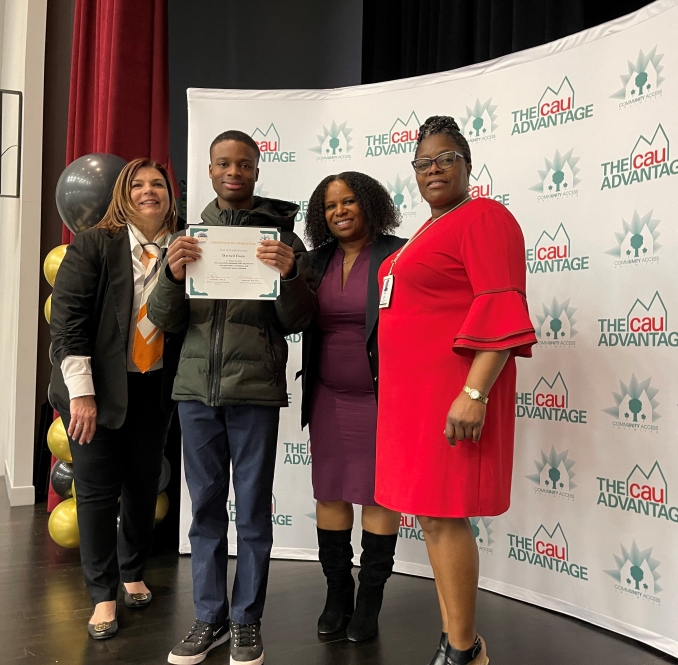
Darnell Dunn celebrates completion of his internship at American History High School with organizers Sandra Lynch, left, CAU Managing Assistant Executive Director of Employment and Community Support Program, LaPrice Weatherington, Newark Board of Education Program Specialist for High School Transition, and Melody Holiday, CAU Director of Transition Services

Melody Holiday, CAU director of transition services, joined the employment services team in 2022 to manage the growing program, building the number of participating employers and supporting 26 interns in 2023, compared to 9 in 2022. 

“It’s helping them towards their independence and becoming productive members of society,” Holiday said. “The program is about helping them to be successful in their own communities.” 

CAU also gave special thanks to LaPrice Weatherington, Newark Board of Education program specialist for high school transition, for her four years working with the program to enroll as many eligible students as possible. 

“Since day one Ms. Weatherington has been our number one fan with assisting in recruiting students and supporting an all-inclusive workforce,” said Sandra Lynch, CAU managing assistant executive director of employment and community support program, who presented Weatherington with a CAU Appreciation Award. 

Students shared that in addition to CAU supporting them to find and complete their internships, the agency also assisted with transportation training, such as learning how to take an Uber or train, as well as resume preparation and soft skills such as communicating in a professional setting. CAU skills instructors Angela Williams and Williemae Bryant checked in during shifts to provide any needed guidance.

“I was learning how to get my work complete and keep a schedule,” said Darnell Dunn, 22, who worked in the office at American History High School. “My grades got better and I feel like I have good experience.”

internship graduation ceremony certificate of appreciation

Sandra Lynch, left, CAU Managing Assistant Executive Director of Employment and Community Support Program, presents the CAU Appreciation Award to LaPrice Weatherington, Newark Board of Education Program Specialist for High School Transition, for her work recruiting students for the internship program

Cashmeir Chambers, 17, assisted in administrative duties at Weequahic High School.

“I enjoyed myself, it was helpful and that’s what I wanted- my first goal was to get a job there and make money,” Chambers said. 

The internship experience has also been transformative for employer partners like Jackie Park Albaum, director of environmental justice and urban agriculture at Groundwork Elizabeth. Albaum worked with six interns to train them on working in a greenhouse, building garden beds and general maintenance tasks. Some of the garden beds will be used at community gardens in Elizabeth and at schools around Union County. 

“We were happy to have the students join us and excited to be their first work location,” Park Albaum said. “I think it provided a good introduction to working in a nonprofit agriculture environment and to managing basic tasks.”

Park Albaum encouraged employers to hire people with disabilities and reach out to become involved in the variety of workforce development programs that bring in employees with disabilities. 

“I think everyone brings value,” she said. “We can always find a way to put a seat at the table and it’s important to include those with disabilities in your workforce.”

For more information on becoming an employer partner of CAU, call Melody Holiday at 908-845-2633 or email mholiday@caunj.org. 

Tagged with: , , ,

Rahway Vigil Dec. 22 to Shine a Light on Homelessness in New Jersey

vigil attendees

vigil There is no substitute for a safe home. The stark realities of homelessness affected at least 667 people in Union County in late January alone this year, according to the federally-mandated Point-in-Time (PIT) report from Monarch Housing Associates, a Cranford-based nonprofit. 

Union County organizers are continuing a tradition on December 22nd to gather with the community in memory of all those who died this year who were unhoused. The Union County Homeless Persons Memorial Vigil will take place at 7 p.m. at Zion Lutheran Church in Rahway. The event is organized by Community Access Unlimited, Union County Interfaith Coordinating Council, and The Elizabeth Coalition to House the Homeless.

The vigil is held on or near the longest night of the year to symbolize the challenges of those who are homeless who may be exposed to dangerous elements and the cold. It also brings together faith leaders and organizations working to prevent and end homelessness in our area. The event will include speakers, prayers and music. 

All are invited and free registration is available on Eventbrite and on the UCICC Facebook page. Attendees are encouraged to bring donations of coats and jackets and/or new socks and gloves for the Elizabeth Coalition to House the Homeless. 

Zion Church is also organizing a distribution of food, jackets, socks and shoes earlier in the day on the 22nd, from 1-4 p.m. before the event in cooperation with the Elizabeth Coalition to House the Homeless. Organizers also plan to help people in need register for social services at this time. 

“Folks should come to the Union County Homeless Person’s Vigil to remember people in our community who have been forgotten, forgotten even to the point of death,” said Rev. Carmine Pernini, UCICC organizer and pastor of Zion Lutheran Church. “We will remember, name, and memorialize homeless people who have died. As a community, remembering those whom others have forgotten is a powerful act which declares that everyone has value in this life, regardless of a person’s balance in their bank accounts or whether or not people own property.”

Zion Lutheran Church will reopen its winter homeless shelter this month in the social hall of the church, which is an overnight shelter for up to 15 people. The church has operated an overnight shelter in the winter season for about nine years. 

Pernini added that citizens can help fight homelessness in their communities by advocating for affordable and transitional housing to their city councils and other local elected officials. Numerous studies have confirmed that long-term housing assistance effectively reduces homelessness and is often less expensive than shelter and other institutional care.

Housing scarcity remains a major problem in America. In New Jersey alone, the 2022 PIT report found that 8,754 persons were experiencing homelessness in late January. Union County contained the second-highest percentage of the state’s unhoused population after Essex County. The results of the report help determine federal funding to programs for people experiencing homelessness.