
Español

Five Ways to Create a Culture of Safety and Support for Individuals with Disabilities

Five Ways to Create a Culture of Safety and Support for Individuals with Disabilities

For a person with a disability, everyday stressors—let alone any sort of traumatic event—can create feelings of fear and apprehension. Their sense of safety, wholeness, and well-being can be easily thrown off, given the right mix of circumstances.  

Though you can’t change their situation, there are things you can do to help someone with a disability cultivate a greater sense of security and wellness as they navigate life’s challenges.   

Five ways to create a safe environment for someone with a disability:  

  1. Be mindful of how you communicate: Establishing a respectful communication approach is a fundamental building block of helping a person with a disability feel more comfortable. Things as simple as speaking directly to the person, maintaining eye contact, and using natural expressions can have a profound impact. Also, be sure to focus on the person, not the disability—and never ask intrusive questions.  
  1. Don’t patronize: Before you jump in and help someone who you perceive might need it, ask! More times than not, they don’t need or want assistance; they want to be empowered to do it themselves. Also, be mindful of your nonverbal body language. Something as simple as a pat on the head or a subtle look of pity in your eyes can make that person highly uncomfortable. By interacting in a non-patronizing way and treating those with a disability as an equal, you set a no-judgment tone that allows them to put their guard down and feel more at ease.  
  1. Focus on their strengths, not their limitations: Your loved one lives with a disability that limits them mentally or physically. But they also have attributes and skills that make them shine in other areas. They may not complete tasks or carry out the same thought process as you, but that doesn’t render their approach any less valuable. Focus on their x-factor—that thing, or series of things, that positively contribute to who they are as a person. By doing this, you instill a sense of confidence and pride that makes them feel more comfortable—and less self-conscious—in any situation.    
  1. Create a physical comfort zone: A person with a disability may not handle stressful situations, traumatic events, or even the everyday hustle and bustle of life as well as their able-bodied counterpart. By creating a safe space in the home for them to escape the noise, wind down, and quiet their mind, you help them regain a sense of control when so much in their life is out of their control. Perhaps this space includes some of their favorite items, comfortable furniture, soft lighting, or even photos of friends and family.  
  1. Employ grounding techniques: The stimulating nature of life and the world around us can be anxiety-inducing, particularly for a person with a disability. If you observe someone with a disability getting wrapped up by fear and panic brought on by their own thoughts, practice grounding with them, whereby you bring them into the present moment. Perhaps you ask them to list their favorite things, focus on an object, practice deep breathing, smell something familiar, or even stomp on the floor!  

Creating a safe and welcoming physical and emotional environment for individuals with disabilities is essential in helping them face life—with its various ups, downs, twists, and turns—with more confidence, security, and overall well-being.  

At CAU, we are passionate about helping people with disabilities overcome their challenges, pursue new opportunities, and live fulfilling lives. Together, we all have the power to change lives.   
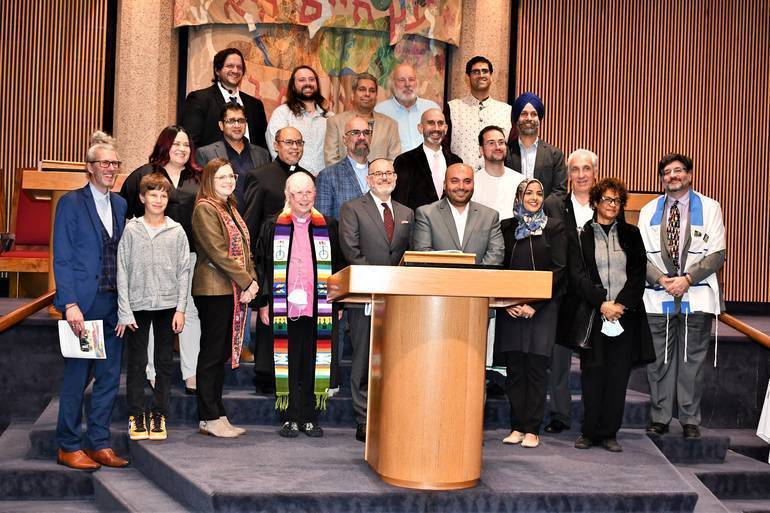
CAU, Union County Interfaith Coordinating Council Host 8th Annual Day of Prayer

Photo Credit: David Brighouse

In partnership with the Union County Interfaith Coordinating Council (UCICC), Community Access Unlimited (CAU) hosted the 8th Annual Union County Day of Prayer on October 27th, 2022. The event is an interfaith celebration of unity and fellowship. This year marked the first year the gathering was held in a Jewish house of worship, Temple Emanu-El in Westfield.

We are thankful to all who attended and helped make this event a success!

The Day of Prayer featured speakers, music, poetry readings, prayers, and more. Read more about the event: https://www.tapinto.net/towns/westfield/sections/religions-and-spirituality/articles/union-county-day-of-prayer-in-westfield-brings-faiths-together

Expanding Employment Opportunities for People with Disabilities: How Far We’ve Come

CAU-Inclusive Employment thumbnail (2)

Today, one-third of Americans with disabilities are employed in the labor force. And though that number is not where we’d like it to be, with many still either unemployed or underemployed, it is important to take stock of how far we’ve come as a nation in protecting the civil rights of people with disabilities, giving them more opportunities to participate in the workplace.

As we celebrate National Disability Employment Awareness month, let’s look back on the journey over the last three decades and appreciate the progress we’ve made as a society and as a business community.

A Look Back

In July 1990, President George Bush signed the Americans with Disabilities Act (ADA) into law. Modeled after the Civil Rights Act of 1964 and the Rehabilitation Act of 1973, the ADA is the most comprehensive disability rights legislation in history. It paved the way for people with disabilities to get better access to public services and enjoy greater social and employment opportunities while increasing awareness that those with disabilities are willing and able to participate in the modern world.

Two years later, amendments to the Rehabilitation Act of 1973 were made to mandate presumptive employability. Around this time, many leading businesses began to recognize disability as a crucial part of diversity, and actively incorporated it into their workplace inclusion programs. This gave way to the US Business Leadership Network, an organization formed to help businesses drive performance by leveraging disability inclusion in the workplace.

The nineties continued to see several notable advancements, including the 1996 Small Business Job Protection Act that provides a federal tax credit to companies that hire workers with disabilities, the new Presidential Task Force on Employment of Adults with Disabilities, and the landmark Olmstead v. L.C. decision, declaring segregation of people with disabilities a form of segregation when integrated community-based settings are an option. In 1999, the Office of Disability Employment Policy (ODEP) was established as a permanent entity within the US Department of Labor to focus on disability within the context of federal labor policy.

To commemorate the 10th anniversary of the signing of the Americans with Disabilities Act, in 2000, President Bill Clinton signed Executive Order 13163, requiring agencies and departments to recruit more people with disabilities and strengthen efforts to provide reasonable accommodations. In 2009, the Federal Recovery and Reinvestment Act significantly increased funding for the Individuals with Disabilities Education Act and provided millions of vocational rehabilitation services, including job placement, training, and education. And in 2010, President Barak Obama signed Executive Order 13548, requiring executive departments and agencies to increase recruitment, hiring, and retention of people with disabilities.

Over the last ten years, we’ve seen an uptick in legislation and awareness initiatives. In 2014, the WIOA (Workforce Innovation and Opportunity Act) was passed to help job seekers access the services they need to succeed in employment and match employers with skilled workers. A year later, the Advisory Committee on Increasing Competitive Integrated Employment for Individuals with Disabilities was established to study and prepare findings, conclusions, and recommendations to Congress and the Secretary of Labor on ways to increase employment opportunities for people with intellectual or developmental disabilities.

Earlier this year, the Valuable 500, the largest network of global CEOs committed to disability inclusion, launched the Generation Valuable, aimed at connecting and integrating C-Suite talent with disability talent. The goal of the initiative is to foster new perspectives, raise awareness, cultivate growth, and address the systemic barriers to promotion people with disabilities face once they hit the middle management level.

Employers Play a Critical Role

With increased awareness that people with disabilities can and should be included in the workforce, we are seeing perceptions begin to change and actions being taken. But more needs to be done. Employers have a tremendous opportunity to support this goal by supplementing their workforce with the largely untapped resource of talented and gifted individuals who are more than able and willing to support, outperform, and even lead their peers.

How to Help Loved Ones with Disabilities Heal from Trauma

CAU-Trauma-Informed Care

Trauma affects individuals with disabilities more frequently and at a more profound level than the general population. When those with a disability experience any form of trauma—from a global disaster, an unexpected loss, and physical, sexual or emotional abuse to neglect, abandonment, divorce, parental incarceration, substance abuse and more—the psychological effects can have a lasting impact on their overall wellbeing. In fact, the ongoing emotional effects that persist following the trauma have the potential to cause even more harm, long after the event has passed. Though the threat itself no longer exists, the brain may continue to alert the body to escape a perceived danger.

As a friend or family member of someone with a disability who has experienced trauma, you play an essential role in helping them along their healing journey. Though you can’t erase the past or take away their pain, here are six steps you can take to support your loved one and help them pave a path to recovery:

  • Listen, validate, and reassure: Begin with the fundamental understanding that talking about a traumatic event can be difficult for anyone, let alone someone with a disability who may already face communication challenges. Offer a supportive ear but don’t pressure them to talk—and never interrupt when they do. Listen intently, validate their feelings, and acknowledge how difficult their struggle is. 
  • Help them establish normalcy: When trauma strikes those with disabilities, they tend to feel a pronounced loss of control, which can lead to anxiety, depression, and feelings of hopelessness. Help them get back into a regular routine where they can establish some semblance of control in a predictable environment. The sooner this happens, the better.
  • Encourage self-care: Make sure your loved one is getting enough sleep, eating a balanced diet (or eating at all), engaging in some form of regular exercise, and limiting alcohol consumption. In addition, encourage them to practice daily hygiene to promote an overall feeling of well-being—things like teeth brushing, bathing, and wearing freshly laundered clothes.
  • Infuse a little fun: Engage your loved one in enjoyable activities whenever possible. Suggest a range of options that might pique their interest. Or better yet, ask them to suggest something; the more involved they are in the decision, the more in control they’ll feel and the more likely they’ll be to fully engage in the activity.  
  • Acknowledge any and all progress: If you see any signs of forward movement in their healing journey, point it out! Help your loved one see that even the smallest step in the right direction is a victory. By helping them to understand that they are making progress, their feelings of hopelessness will begin to dissipate.  
  • Encourage them to seek professional help: While your support is crucial in helping your loved one heal from trauma, guidance by a professional may also be warranted. More specifically, encourage them to pursue professional support from care teams and healthcare professionals who are trained in trauma-informed care.

By recognizing that a trauma has occurred in your loved one and offering ongoing support, you can help them acknowledge, work through, and heal from it in its wake. You’re not in it alone. At CAU, we have a long history of helping people with disabilities recover from trauma. We work with each person on an individual basis based on their unique circumstances and challenges to help them find inner strength and resilience and positively transform their lives despite past experiences.

Hiring People with Disabilities Gives You a Competitive Advantage in Today’s Market—and Here’s Why

According to the CDC, 1,415,625 adults in New Jersey have a disability—or one in five adults.1 Despite the fact that this subset represents 21% of the state’s population, the employment rate of working-age adults with disabilities caps off at 37.7%.2 This community of workers is an untapped resource of talented and gifted individuals who are more than able and willing to support, outperform, and even lead their peers.

Given the continued labor shortages brought on by The Great Resignation, employers have an opportunity to expand their applicant pool with candidates who offer a unique suite of valuable skills and talents, a strong motivation to work, and an unwavering desire to exceed expectations. Beyond addressing your immediate need to fill staffing gaps amid the profound hiring shortages, hiring people with disabilities offers a wealth of benefits that can significantly impact your overall business.

Seven reasons why you should hire people with disabilities:

  1. Boost revenue: A recent study from Accenture, in partnership with Disability:IN and the American Association of People with Disabilities (AAPD), revealed that businesses that offered the most inclusive working environment for disabled employees saw a 28% greater annual revenue over a four year period than their non-DEI focused counterparts, and were four times more likely to have total shareholder returns outperform that of their peers.3
  • Gain competitive advantage when hiring: More than 75% of job seekers report a diverse workforce as an important factor when evaluating companies and job offers.4 By hiring people with disabilities, you not only supplement your workforce with highly committed and uniquely skilled employees, but you also set yourself apart when attracting talent as a whole.
  • Power your business with diverse perspectives and unique skillsets: Workers with disabilities have unique and powerful skills and experiences that can fuel innovation, success, and growth. Adults with Autism, for example, have been shown to possess higher-than-average abilities in pattern recognition, memory, and mathematics, while many others with intellectual or physical disabilities come to the table with strong attention to detail, inherent creativity, and varied perspectives on how to confront challenges and get a job done. Taken together, these characteristics exemplify many of the qualities employers seek when building a strong workforce.
  • Lower turnover: The Department of Labor found that employers who embraced disability saw a 90% increase in employee retention.5 Not only does the general employee base feel more loyal to employers who practice diverse hiring, but the workers with disabilities, themselves, have a strong desire to work, find a greater sense of fulfillment in their day-to-day work than their non-disabled counterparts, and tend to stay put in one job long-term.
  • Expand your market: The U.S. Office of Disability Employment Policy categorizes persons with disabilities as the third-largest market segment in the U.S. One of the best ways to tap into this massive market segment and increase patronage from people with disabilities is through representation in the workplace. 
  • Customer loyalty: By strengthening your commitment to diversity, equity and inclusion for a workplace that employs people with disabilities, you improve your reputation and differentiate yourself in the marketplace. According to research done by the National Business and Disability Council, 66% of consumers will purchase goods and services from a business that features persons with disabilities in their advertising,6  thereby illustrating that embracing a workforce of this talented community of employees matters.

Persons with disabilities continue to be underrepresented in corporate America. Yet, this subset of workers offers a unique suite of valuable skills and talents that optimally position them to perform all types of jobs at all levels, in businesses of all sizes. As employers and business leaders, you have an opportunity to combat your staffing shortages with highly skilled employees that exemplify the qualities you’re looking for in a workforce, while empowering people with disabilities to be more independent, better provide for themselves and their families, and live a fulfilling life where they can contribute to a thriving workforce.

For more information about the benefits of practicing diverse hiring or for access to one of NJ’s most robust talent pool of people with disabilities, contact us here.  

1 https://www.cdc.gov/ncbddd/disabilityandhealth/impacts/new-jersey.html

2 https://njbmagazine.com/monthly-articles/a-meaningful-mission-hiring-workers-with-disabilities/

3, 6 https://www.accenture.com/t20181029T185446Z__w__/us-en/_acnmedia/PDF-89/Accenture-Disability-Inclusion-Research-Report.pdf

4 https://www.glassdoor.com/employers/blog/diversity-inclusion-workplace-survey/

Community Access Unlimited Assists Union County with Jobs, Education & Training

More than 80 youth and young adults participated in the “Empowering our Youth” Summer Program

Union County, NJ – September 16, 2022 – Community Access Unlimited (CAU) once again partnered with Union County to help young people take the important first steps towards their introduction into professional life through the “Empowering our Youth” summer employment program.

The comprehensive Youth Forward program connects 14-24 year olds with jobs, education and training. Youth Forward is funded by a grant under the federal Workforce Innovation Opportunity Act, administered by the Union County Workforce Development Board through the American Job Center.

Community Access Unlimited (CAU) is a partner in the program and has placed 20 young people in paid internships so far this year. The agency also assists participants with job training and the support they need to work, such as organizing transportation and funds for work certifications or uniforms.

“Union County strives to provide as many resources for residents looking for employment and work experience and it is especially important to provide our youth with the tools they need for their future in the workforce,” said County Commissioner Chair Rebecca Williams. “We are grateful for the ongoing partnership with Community Access Unlimited and their contribution has made our ‘Empowering our Youth’ program even more successful, with over 80 young adults participating.”

Young people can qualify for the program if they require assistance to access an educational program or job: they may have a disability, come from a family with low income, have dropped out of high school, or aged out of the foster care system.

For youth with a disability, the program may be even more impactful. The unemployment rate for people with disabilities is more than double that of the general population, about 10 percent versus about 4 percent in 2021, according to the Bureau of Labor Statistics.

“CAU has played a pivotal role in assisting our younger residents with disabilities gain access to job training, work experience and placement ,” said County Commissioner Sergio Granados, who also serves as Liaison to the Workforce Development Board. “The Commissioner Board is proud that CAU’s mission results making our youth more well-rounded, giving them the tools they need for easier integration into the workforce.”

CAU has also ensured that about 10 program participants who have a disability have access to prevocational services at the agency, which can include resume building and career planning. Several interns have also worked at CAU, learning clerical skills and assisting with marketing tasks such as making flyers and editing video. CAU is a Union County-based, statewide non-profit that works to integrate people with disabilities and youth at risk into the general community through comprehensive supports.

“I’ve had a great experience here,” said Naimah Fields, 17, who worked as a marketing intern at CAU and is starting her senior year of high school. “I’m learning how to scan, use different programs like Excel, and I’m learning how to dress professionally and talk to other people.”

Participants were placed at internships in the community at a variety of businesses: retail, restaurants, technology, transportation, pharmacy, and even a virtual reality film program at Thomas Jefferson Arts Academy.

Twins Gabriella and Victor Ramirez, 15, said they were able to practice writing scripts and filming actors during their internship at the school.

“All the people we worked with were very welcoming, so it was a pleasant experience,” Victor said.

Community Access Unlimited (CAU), celebrating 43 years in 2022, supports people with special needs in achieving real lives in the community. CAU provides support and gives voice to adults and youth who traditionally have little support and no voice in society. CAU helps people with housing, life skills, employment, money management, socialization and civic activities. CAU also supports opportunities for advocacy through training in assertiveness, decision-making and civil rights. CAU currently serves more than 3,000 individuals and families, with the number served growing each year. For more information about CAU and its services, contact us by phone at 908-354-3040, online at https://www.caunj.org or by mail at 80 West Grand Street, Elizabeth, NJ 07202.

Union County residents can still sign up and start an internship this year with Youth Forward. You can connect with Youth Forward by calling 908-558-2520, emailing info.youthforward@ucnj.org, or by filling out the online contact form at ucnj.org/dhs. For more information, visit online at ucnj.org/youth-forward.

To contact the Union County Department of Human Services, residents can use the online contact form at ucnj.org/dhs, email the DHS Action Line at DHSaction@ucnj.org, or call 908-527-4847.

For more information and updates on all Union County services during the COVID-19 outbreak, visit ucnj.org/covid19. General information about COVID-19 is available through the New Jersey Department of Health at nj.gov/health.

For all Union County programs and services visit ucnj.org, call the Public Info Line, 877-424-1234, email info@ucnj.org or use the online Contact Form.

Connect with Union County on social media.

How to Spot Trauma

How to Spot Signs of Trauma in People with Disabilities

Research shows that those who have disabilities experience trauma at significantly higher rates than the general population. Recognizing and addressing trauma in people with developmental disabilities is crucial in helping them achieve and maintain a sense of safety, power, and self-worth. However, signs of trauma in a loved one who has a disability can often be overlooked. In many cases, your only clues may come in the way of highly nuanced non-verbal cues. The signs are there; you just have to know what to look for.

8 hallmark signs of trauma in individuals with developmental disabilities

A traumatic experience can manifest in many ways. Here are some of the most common:

  1. Cognitive changes: Look for new confusion, memory loss, or lack of concentration. You might also notice difficulty learning new skills or a noticeable appearance of being distracted.
  • Altered behavioral patterns: The onset of mood swings, withdrawal from friends and family, and lack of interest in previously enjoyed activities are also red flags of trauma, as are aggression, hyperactivity, and even self-criticism.
  • Sleep disturbances: From difficulty falling or staying asleep to sleeping too much, changes in a person’s sleep patterns are among the first signs of trauma. Frequent nightmares, bedwetting, and even fear of sleep are also common following a traumatic event.
  • Unexplained physical symptoms: Trauma also commonly manifests as body aches and pains, GI disturbances, rapid heartbeat, loss of bladder or bowel control, and even sexual dysfunction. You might also notice changes in appetite, new muscle tension, extreme exhaustion, sweating, or a rapid fluctuation in weight.
  • Changes in hygiene: Changes in your loved one’s self-care routine are also a cause for concern—from a diminished desire to shower or keep up with oral hygiene to wearing the same clothes on repeat.  
  • Psychological changes: You may also notice a range of new psychological issues, including anger, heightened anxiety, frequent panic attacks, new obsessions, compulsive behavior, depression, and even outward displays of shame.  
  • Verbal idiosyncrasies: Pay careful attention to any changes in the way your loved one speaks, including repetitive statements, out-of-the-blue comments about something unrelated to the current situation or setting, or recurrent questions about something very specific.
  • Avoidance behaviors: Notice any new phobic mannerisms towards specific triggers, including places, people, sounds, or smells.

When people with intellectual disabilities experience a highly stressful life event that shatters their sense of security and wellbeing, they may experience an intense sense of helplessness beyond their normal coping capacity. Letting these fears and feelings go unchecked can have long-term emotional and physical consequences.

As a leader in trauma-informed care, CAU can help you work with your loved one to ensure his or her trauma is adequately addressed. We understand that traumatic experiences can manifest differently—and require a different approach—in individuals with disabilities. That’s why we take a customized approach that integrates the proven principles of trauma-informed care to set those suffering from trauma on a positive life trajectory despite challenging past events.

CAU Walkathon is a Celebration and Fundraiser to Support Individuals with Disabilities

walkathon group picture

Attendees at the Ira Geller Walkathon on Saturday, Sept. 10.

A Walkathon tradition was a show of unity and a day of fun on Saturday to support life-changing services for people with disabilities and youth at risk.

Community Access Unlimited (CAU) celebrated the Ira Geller Walkathon in Warinanco Park with hundreds of members, staff and supporters in attendance. CAU is based in Union County and works statewide to help integrate people with disabilities and youth at risk into the community through comprehensive supports. Services include housing, vocational and life skills training, education programs, advocacy, community-based support and more.

Recognizing a history of helping people in Union County and beyond for more than 43 years, Union County commissioner Sergio Granados credited CAU’s work and impact under Executive Director Bernadette Griswold.

“Bernadette is truly an inspiration to Union County, she’s forward thinking…you continue to be an organization that is at the heart and soul of Union County,” Granados said.

commissioners at walkathon

(left to right) Union County Commissioner Sergio Granados, CAU Executive Director Bernadette Griswold, and Union County Commissioner Kimberly Palmieri-Mouded at the Ira Geller Walkathon.

The event is named in memory of Ira Geller, a former CAU member who had a passion for promoting self-advocacy with his peers and fundraising for the annual walk. Sponsors for the event included Valley Bank, Innovative Benefit Planning, Paradigm Marketing and the Union County Board of County Commissioners.

Among the attendees were several members who have been a part of CAU services for over 30 years. In that time they have found support to grow their independence and find work, a community, and positive relationships.

Mary Kurnos joined CAU as a member in 1987 and has been employed by the agency for nearly 30 years. She takes pride in her job and living independently.

“I pay my bills and take care of my home and my appointments on my own,” Kurnos said. “They helped me a lot…my first counselor showed me how to make out artificial checks.”

Sharon Mohry said she has been a CAU member for 30 years and had help with taking care of daily responsibilities to become more self-sufficient. She is also excited to be celebrating her first anniversary with her partner, who she met at CAU.

“They helped me with cooking and cleaning the apartment. Now I can do things on my own,” she said.

Mohry added that CAU events are a good opportunity for members to socialize and get outside.

“The walkathon helps us get out and do things and helps us be healthy by walking around the park,” she said.

dancers walkathon

Dancing at the Ira Geller Walkathon on Saturday, Sept. 10.

Nicole Suber, a newer employee in the HR department at CAU, said that anyone considering working at the agency should know that they make a difference for members with housing and job placement supports, among other services. She was attending her first walkathon on Saturday.

“It’s great to raise funds so the programs can continue to grow and there can be more activities for the members,” she said. “I also think it’s good to hang out with coworkers, the people you see every day.”

CAU holds several fundraising events through the year to support agency services for members. Supporters can follow Community Access Unlimited on Facebook to learn about services and future events. Information about jobs is available on the CAU website.

Tagged with: ,

How Trauma Affects People with Intellectual Disabilities

How Trauma Affects People with Intellectual Disabilities vs. the General Public

Trauma can strike anyone at any time. However, research shows that those with disabilities are much more likely to face adverse life events and traumatic experiences than the general population.

Consider this:

  • People with any disability are 1.2 to 2 times more likely to suffer from maltreatment than those without a disability, 3.4 times more likely to suffer from neglect, and 4 times more likely to be the victims of crime1
  • People with developmental disabilities, in particular, suffer 2.5 to 10 times the abuse and neglect of those without2
  • Five million crimes are committed against individuals with disabilities each year in the U.S.3

Why is this?

People with disabilities are highly vulnerable to psychological trauma compared to the general population. Their limited social abilities, verbal skills, and general knowledge base put them at higher risk of exposure to things like abuse and bullying. And with frequent feelings of rejection and isolation, they tend to crave attention and affection, which makes them more susceptible to manipulation by others. And in many cases, they’ve been taught to “do as they’re told” and comply with authority figures without question—in essence, stripping them of the confidence to speak up and advocate for themselves. What’s more, their cognitive impairment and processing delays may make it difficult for them to understand what is happening in an abusive situation—or even decipher the fact that they are being abused as it is occurring.

Beyond acts inflicted by others, trauma can also emerge from life events—from sudden or frequent changes in living arrangements or the death of a family member to a medical procedure or even a new awareness of the reality of their disability. Regardless of where or how a trauma emerges, people with disabilities are generally more vulnerable at all stages of any traumatic event—before, during, and after.

Limited coping skills make it harder to recover

For anyone who experiences trauma, whether they live with a disability or not, recovery is based largely on the ability to face and work through the myriad of complex emotions associated with the event. When it comes to people with disabilities who are less emotionally and mentally equipped than the general population, achieving recovery is far more challenging. Their limited ability to describe a traumatic experience, make sense of what happened, or verbalize their emotions about it puts them at a notable disadvantage on their healing journey. In many cases, it goes unnoticed and unresolved altogether, which can have life-long consequences for the individual. This is where the ability to recognize non-verbal signs of trauma in someone with a disability becomes so crucial.

Changing the trajectory

Recognizing and treating trauma in a person with an intellectual or developmental disability is essential to their quality of life. Trauma-informed care has recently emerged as one of the most effective ways to accomplish this. By offering a more nurturing intervention approach for people with intellectual and developmental disabilities to uncover and address trauma, care teams and medical professionals can help the affected individuals cope with adverse events in a healthy and productive way, thereby minimizing any associated aggressive and destructive behaviors.

At CAU, our goal is to empower people with disabilities to live a life filled with promise and opportunity. We work with our members on an individual basis based on their unique circumstances, challenges, and communication style to ensure their voice is heard and their emotional needs are met in a safe and empathetic environment.

  1. https://bit.ly/3BGkpDF
  2. http://file.lacounty.gov/SDSInter/dmh/1004656_NCTSN-traumatic-stress-DD.pdf

The Ira Geller Walkathon is back on Sept. 10!

Walkathon people smiling

Walkathon people smilingCommunity Access Unlimited (CAU) invites community members and friends to a day in the park filled with games, music, activities and food in support of a great cause on Sept. 10.

The 24th annual Ira Geller Walkathon will be held in Warinanco Park in Roselle at 10 a.m. near the boathouse. Donation page and registration can be found at caunj.org. Attendees who donate or raise $100 will receive a complimentary T-shirt! 

CAU works to provide community access through comprehensive support services for people with disabilities and their families, as well as youth at risk. A $25 suggested donation at the event will support CAU programs that make a difference for more than 3,000 individuals and families in New Jersey, including housing, education, employment services, support coordination, day program and support services. These programs serve the agency’s mission to create an inclusive, accessible world where everyone can lead a fulfilling life as part of the community.

“This is our annual celebration that represents the cooperation, teamwork and community connections that make CAU important to so many people,” said event organizer Jeanette Lebron, assistant executive director of communications and outreach.

The event is named in memory of Ira Geller, a former CAU member who had a passion for promoting self-advocacy with his peers and fundraising for the annual walk. Geller worked part time at the library in Springfield and for the county at Warinanco Park. He was one of the founding members of Helping Hands self-advocacy group at CAU in 1984.

The Walkathon starts at 10 a.m. with in-person registration starting at 9 a.m. Attendees will enjoy a picnic with sandwiches immediately following the walk/roll around the lake at the park. The event will also have games for children and families and a DJ.

Those supporting the walk this year include Valley Bank, Innovative Benefit Planning, Paradigm Marketing  and many other generous sponsors. For more information, contact CAU at 908-354-3040 or email info@caunj.org.

walkathon

Tagged with: , , , ,