Español

Roman’s Story: Can I Talk to You?

Roman’s Story: Can I Talk to You?

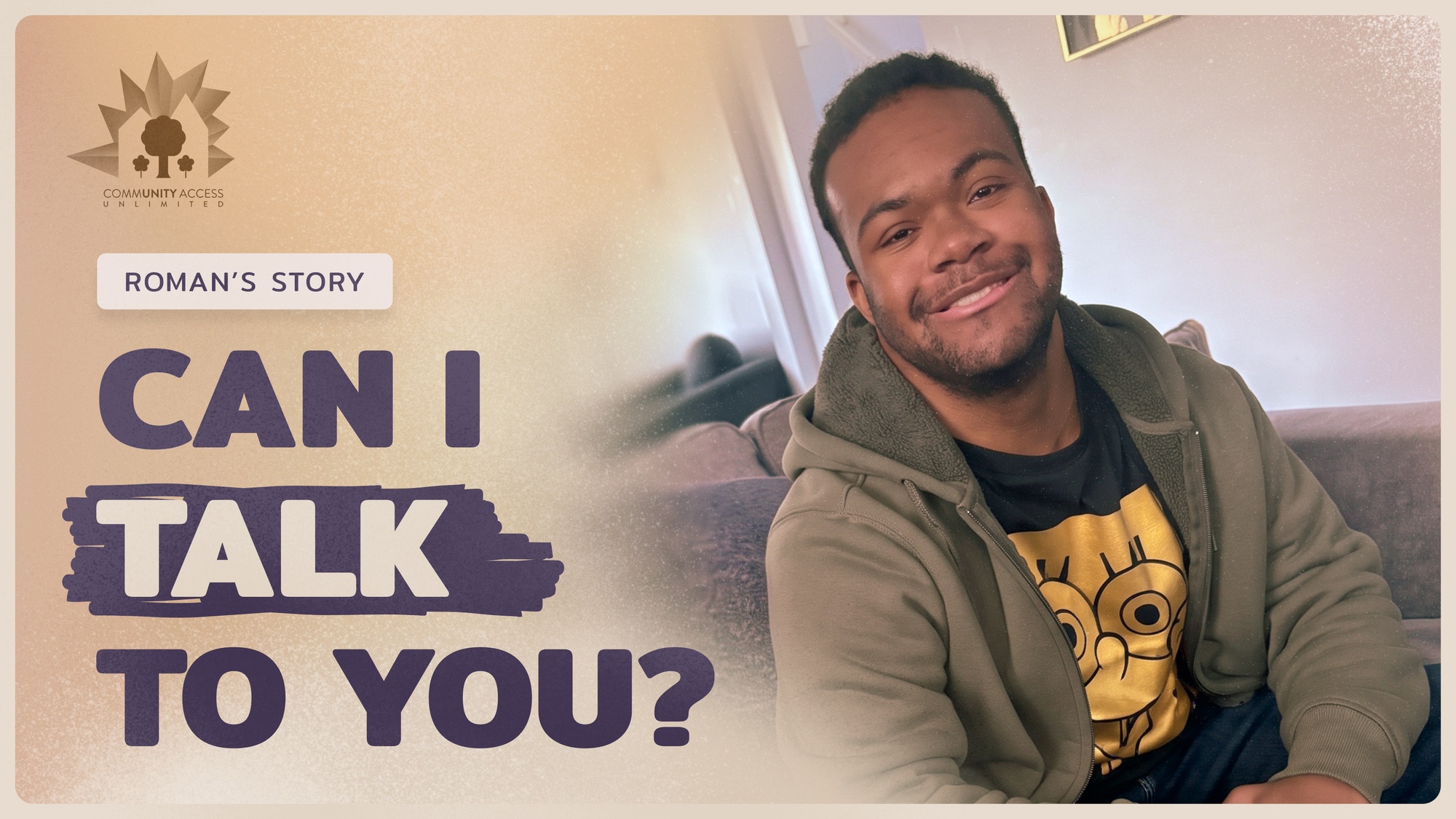
Roman smiles from a couch beside the words Roman's Story: Can I Talk to You?

Roman smiles from a couch beside the words Roman's Story: Can I Talk to You?

By Lauren Meade, Director of Speech-Language Pathology

Roman has been receiving speech therapy at CAU’s day habilitation program for several months, and his progress — driven as much by his own determination as by the support around him — shows what is possible when someone is met on their own terms.

Roman communicates through a unique combination of oral speech and gestures, and understanding him is not always easy. He presents with apraxia of speech, a motor planning disorder that affects his ability to sequence the movements needed to produce speech sounds. The same word can sound different from one attempt to the next, making him difficult to understand without context and a familiar communication partner. Roman is a complex communicator. He is also one of the most patient and determined people in the room, and he puts in the effort to be understood.

Because treating apraxia of speech can take years of intensive work with a speech-language pathologist (SLP), the immediate goal was not perfect oral speech, but communication. Roman needed help now to be understood, to fully participate, and to have his wants, needs, and thoughts heard clearly. A communication device was quickly recommended, with the longer work of traditional speech therapy for apraxia planned alongside it.

Roman received an assistive technology evaluation, and an augmentative and alternative communication (AAC) device — a speech-generating app on an iPad that says a word aloud when a person presses a button — was recommended. Purchasing the device and learning to use it in speech therapy were the next logical steps. This didn’t go as planned, however. Roman was happy at his day program, enjoying time with peers and staff, so leaving to go to a therapy session wasn’t always something he wanted to do. His SLP’s iPad wasn’t particularly intriguing to him either. With just one 30-minute session a week — if that — there wasn’t enough time together to build the trust, rhythm, and momentum that a therapeutic relationship requires.

Rather than pushing forward with a device purchase and risking therapy and a new AAC device becoming something Roman associated with pressure and demands, his team took a different approach. Speech therapy was increased to two flexible, low-demand sessions per week. The goal was to meet weekly, build connection, and give Roman the chance to see, on his own timeline, what therapy and the device could offer him.

If Roman was in the middle of something he loved at his day program, he didn’t have to leave it behind to attend speech therapy. He was invited to bring the activity with him, or his therapist would join him where he was. And while he continued doing his activity, words were modeled on the iPad in the context of what they were doing together. This was presented not as a lesson, but as a conversation. He could watch someone he was beginning to trust use the device naturally, without any pressure to do the same.

That foundation matters, because communication is a deeply personal act. When it is forced rather than inspired, it is no longer communication but, instead, compliance. True communication has to come from within, which means the role of a support team is not to require it, but to create the conditions where a person wants to reach out.

In the meantime, Roman still needed to be understood, and this meant honoring what was already working: his unique speech sounds, his gestures, and his persistent attempts to get his message across. A personal communication dictionary was developed to capture his pronunciations and share them with the staff and supporters around him. If Roman says “pat pat,” a supporter can look under the letter P, find the entry, and learn that for him, it means “backpack.” His guardian described the dictionary as a helpful guide rather than a rulebook — a reflection of “the way Roman speaks and communicates, possibly differently, to each of us.” Paper communication boards mirroring the AAC app on the iPad went home with him, extending support beyond the therapy room.

As rapport increased, so did Roman’s communication milestones. He used the borrowed AAC device to tell his therapist what he brought for lunch. He responded to a slow, exaggerated speech model and produced a sound he had never made in therapy before. A personal dictionary that started with a handful of entries grew to over 70, built one conversation at a time. He began bringing the iPad with him to sessions on his own. He is working on finding the words that matter to him on the device, and when a word isn’t there, he helps program it in, choosing the images for the buttons himself. His favorite TV shows are being added to the TV page in the program. He selected the protective case he wants for his own AAC device, which he is receiving soon. Today, Roman navigates to the People, Places, Read, and Party pages to talk about the things that are important to him: his family, church, his Bible, and socializing. It is not uncommon these days for Roman to bring the borrowed device with him, knock on his SLP’s door, and ask, “Can I talk to you?”

Roman’s mother, Frances, expressed that she is thrilled by his progress — by his initiation, his growing independence and familiarity with the device, and above all, by “his overall motivation to communicate and connect.”

The clearest evidence of Roman’s motivation is what happens when communication breaks down. He is becoming more attuned to cues that someone didn’t understand him. He will say his word again, and then perhaps again, but more slowly. He may gesture, as he has always intuitively done. If he still can’t be understood, his SLP might ask, “Is it a place? A food? A person?” — and Roman scans those pages in the device to find his word. His patience and persistence stand out equally. Roman meets frustration that would make most people shut down with determination. He tries again, he tries a different way, and he keeps going until he is understood.

Roman’s journey is a reminder that underlying all communication, there is motivation and connection. When a person feels understood, and is given the space, time, and support to find their own way, they find a way to tell their story. Roman is telling his.


The High Price of Financial Independence for People with Disabilities

A small green seedling sprouting from dark soil.

A small green seedling sprouting from dark soil.

For people with disabilities, financial independence is an important part of living a full and meaningful life. Yet for millions of Americans who rely on Supplemental Security Income (SSI), an outdated federal policy can make something as simple as saving money a threat to their financial stability.

Beginning in January, the maximum monthly federal SSI benefit for individuals will increase to $1,029, surpassing $1,000 for the first time. And while that increase is welcome, the amount of money an individual can have in savings and other countable assets without jeopardizing their benefits remains just $2,000.

That limit has not changed since the 1980s.

When it was established, $2,000 represented more than five months of SSI benefits. Today, it represents less than two. And while the cost of living has increased dramatically over the past four decades, the rules governing how much someone can save have remained frozen in time.

Think about what that means for someone trying to build a more independent life. Saving for a security deposit on an apartment, an unexpected car repair or a replacement part for a wheelchair could put their SSI benefits at risk. In many cases, losing SSI can also jeopardize access to Medicaid and the essential health care services it provides.

At Community Access Unlimited, we see firsthand how policies like these affect people. Through our housing, employment, life skills and financial management programs, we support more than 3,000 people in building greater independence and participating fully in their communities.

Recently, one person we serve lost Medicaid coverage after exceeding the $2,000 asset limit. Our team worked with the individual and their family to explore options for protecting those funds, including an ABLE savings account, and helped them reapply for Medicaid coverage.

ABLE accounts offer one important option, allowing eligible people with disabilities to save money for qualified expenses without automatically jeopardizing certain public benefits. But these accounts do not eliminate the need for broader reform.

Two pieces of legislation currently before Congress offer opportunities for change. The bipartisan SSI Savings Penalty Elimination Act would raise the individual asset limit to $10,000 and adjust it for inflation going forward. The SSI Restoration Act would address another outdated restriction that begins reducing SSI benefits once an individual’s countable earnings exceed just $65 a month. It’s a threshold that has remained unchanged for decades.

Neither proposal has received a congressional hearing this session.

At CAU, we believe public policies should support the independence and financial security that people with disabilities work so hard to achieve. The ability to save for an emergency, pursue employment and plan for the future should be encouraged.

We support meaningful reform of these outdated rules and will continue advocating for policies that promote greater opportunity and independence.

For those who would like to learn more or share their perspectives with federal lawmakers, the U.S. Capitol switchboard can be reached at (202) 224-3121 to connect with your senators or representative.

After all, financial independence should be something people with disabilities can work toward with confidence, knowing that planning for tomorrow won’t put their security today at risk.

T.EAT.CH Cafe Culinary Graduates Celebrate in Elizabeth

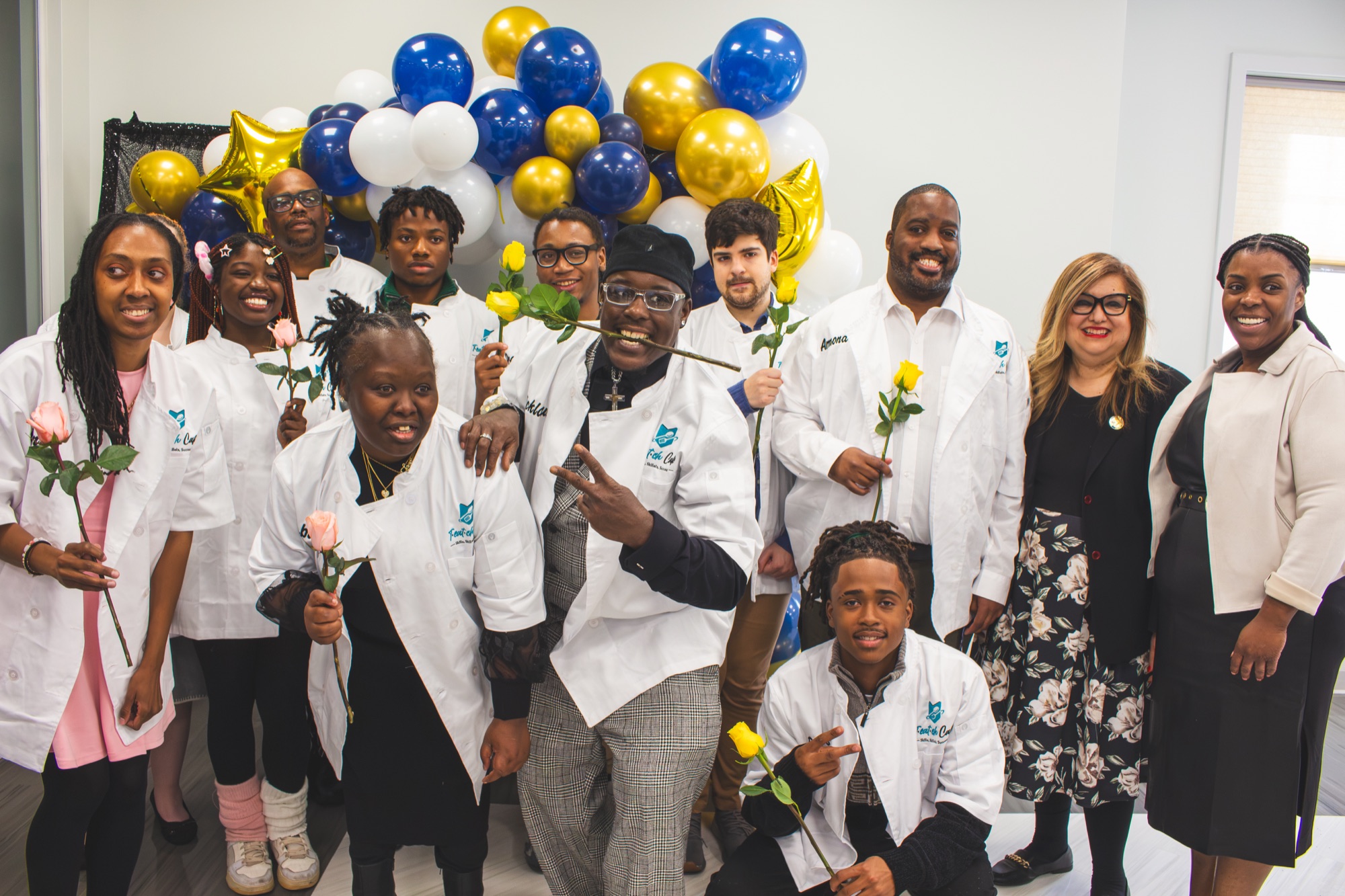
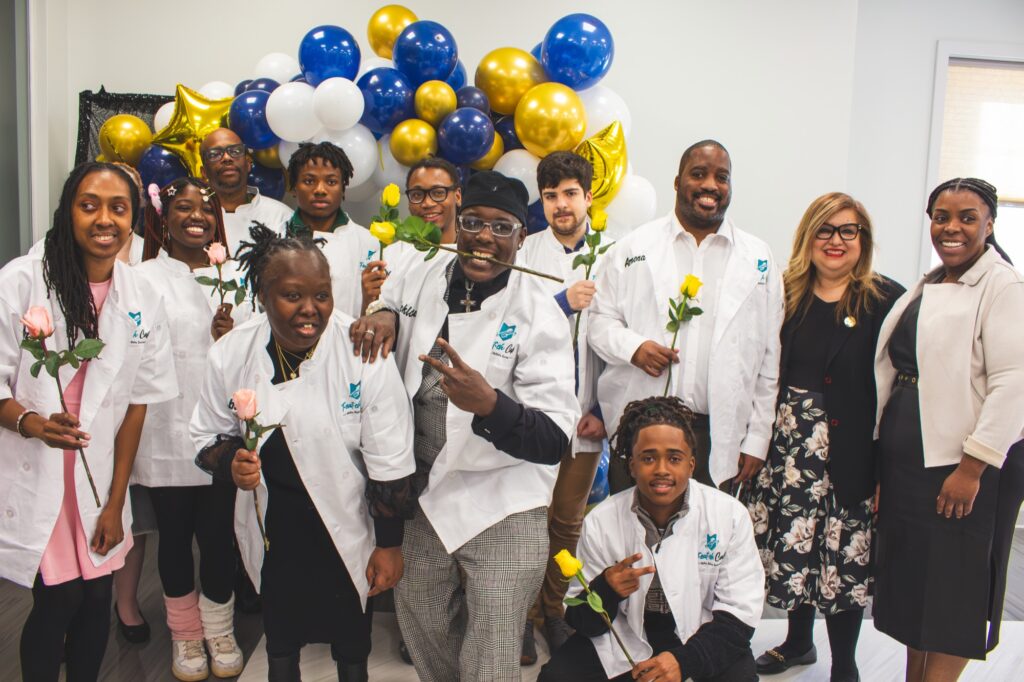
The T.EAT.CH Cafe graduating class in white chef coats, holding roses, in front of blue and gold balloons.

The T.EAT.CH Cafe graduating class in white chef coats, holding roses, in front of blue and gold balloons.

ELIZABETH, NJ – Ten graduates of the T.EAT.CH Cafe Culinary Hospitality Training Program were recognized on Friday, October 23, at a ceremony at Community Access Unlimited (CAU). Every one of them earned ServSafe certification.

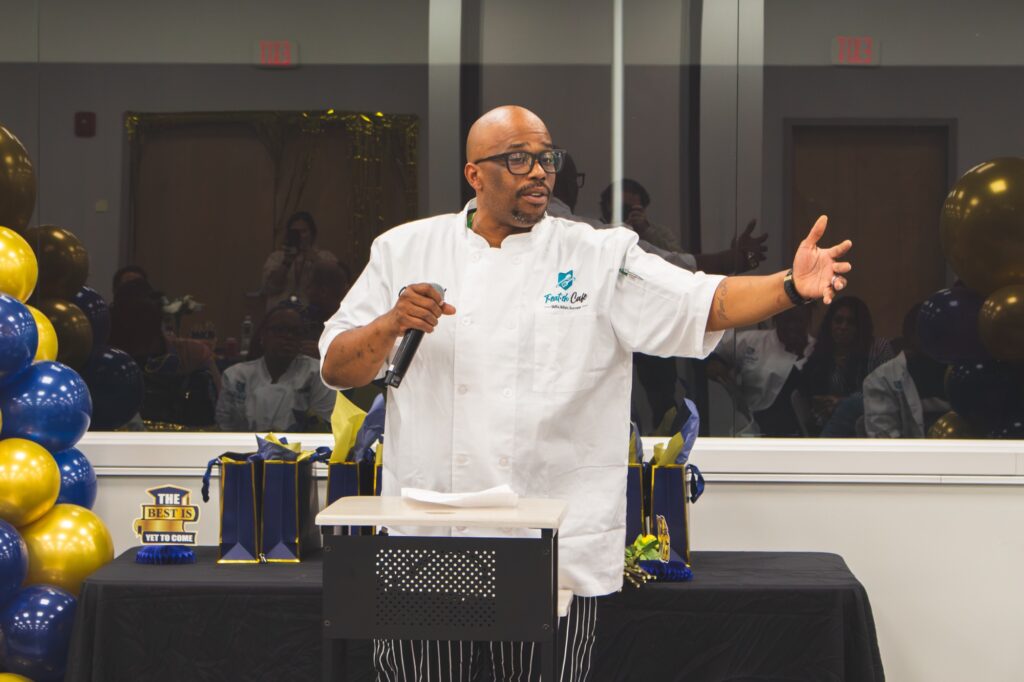
The T.EAT.CH Cafe is CAU’s ADA-compliant teaching kitchen and lunch cafe, where anyone can gain real-world culinary skills. The program, whose motto is “Skills, Skillets, Success,” helps individuals build careers in the culinary field. Chef Paul O’Loughlin, CAU’s Chef Trainer, led the 12-week training and offered the class some parting words.

Chef Paul O'Loughlin, in a white chef coat, speaks to the graduates.

“Twelve weeks ago you walked into this room,” he told the graduates. “Some of you were nervous. Some of you didn’t know if you belonged in the kitchen. But look at you now.” Several graduates were moved to tears as their teacher, peers and families celebrated them. ServSafe is the national food safety standard, so their certification goes with them to any kitchen.

“The graduating class has transitioned from following recipes to understanding the dynamics of the culinary field,” said WillieMae Bryant, CAU’s Director of Transitional Service. “Their certification isn’t just a piece of paper; it’s proof that whatever you put your mind to, you’re capable of achieving.”

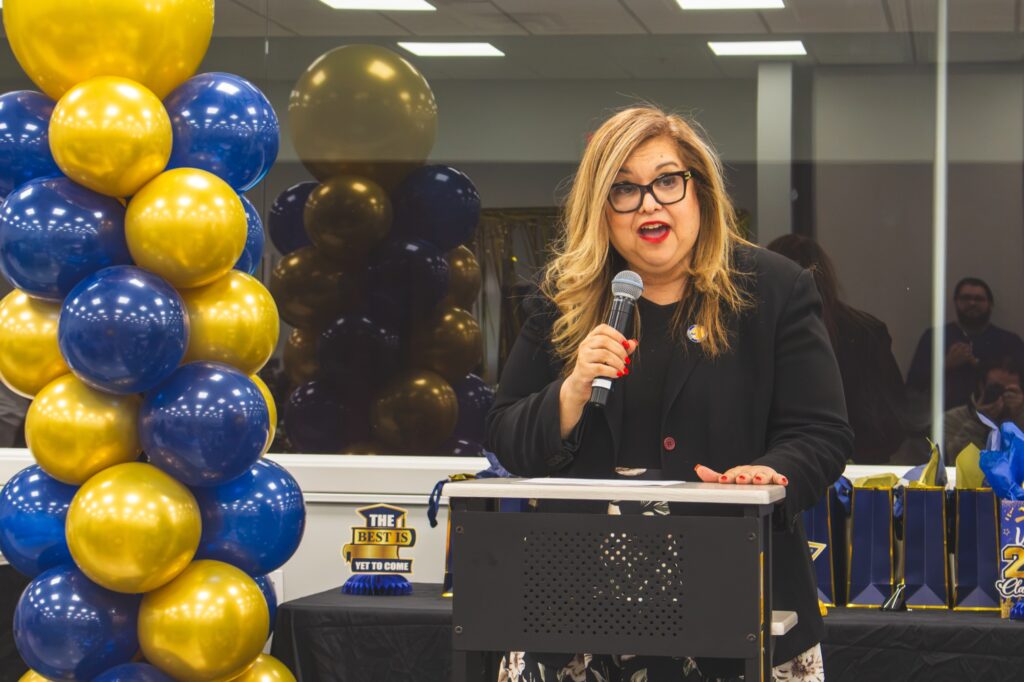
Assemblywoman Annette Quijano speaks at a podium during the graduation ceremony.

Assemblywoman Annette Quijano joined the celebration. She recently helped secure $450,000 in state funding for the program and for CAU’s Academy of Continuing Education.

Chef O’Loughlin closed with advice for their first jobs: “Wash up. Ask questions when you’re not sure. Clean as you go. And take care of your team.” Then: “Class dismissed. Go cook!”

Thank you to the funders who support the Culinary Hospitality Training Program: the J.C. Kellogg Foundation Fund, OceanFirst Foundation, Union County Savings Bank, Wakefern and Wegmans.

Learn more about the Culinary Hospitality Training Program.

Zeta Phi Beta Chapter Donates Winter Gear to Community Access Unlimited

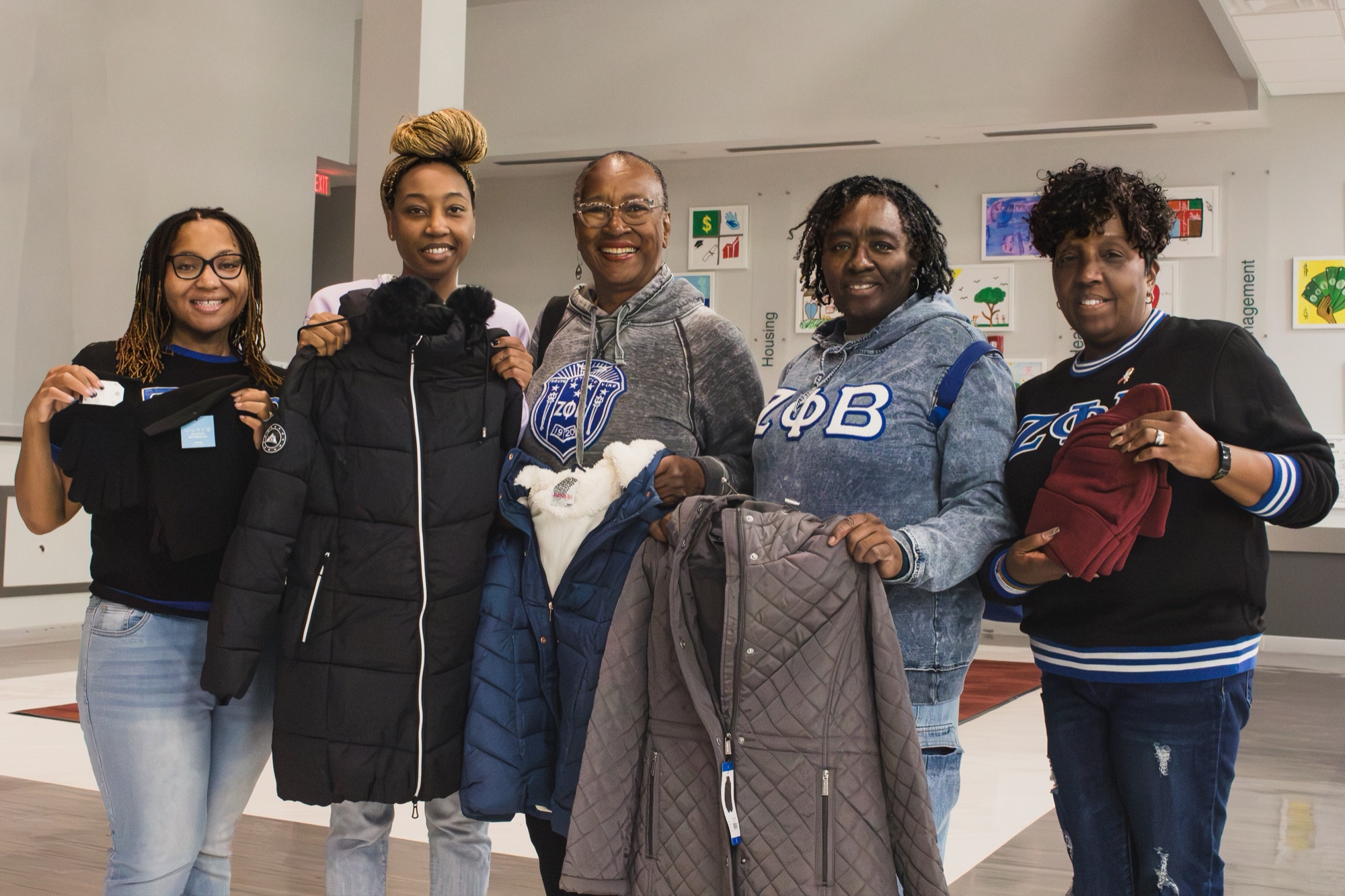
Members of the Eta Omicron Zeta Chapter of Zeta Phi Beta Sorority hold up donated winter coats.

Members of the Eta Omicron Zeta Chapter of Zeta Phi Beta Sorority hold up donated winter coats.

ELIZABETH, NJ – The Social Action Committee of the Eta Omicron Zeta Chapter of Zeta Phi Beta Sorority, Incorporated delivered brand-new winter gear to Community Access Unlimited (CAU) on Friday, October 23. An estimated 30 to 40 men’s and women’s coats in sizes Small to 3XL, more than 60 pairs of gloves, and more than 100 hats were graciously provided to the individuals we serve.

People often arrive at CAU’s emergency housing without basics like a winter coat. The donation will go to the people who need it most as the weather turns cold.

The chapter reached out after connecting with CAU’s Ashley Stith about the need. Committee Chair Monique Abercrombia organized the drive, and chapter members Mary Jessup, Judy Hill and Kennie Johnson joined her for the drop-off.

“We hope that it brings a smile to each participant, and that they know they are loved,” Abercrombia said.

Thank you to the chapter for its generosity.

Community Access Unlimited Achieves Quality Assurances Accreditation from CQL

The Community Access Unlimited logo beside the CQL Accredited seal, joined by the word "is."

The Community Access Unlimited logo beside the CQL Accredited seal, joined by the word "is."

ELIZABETH, NJ – Community Access Unlimited (CAU) is excited to share that it has been awarded Quality Assurances Accreditation from CQL | The Council on Quality and Leadership. The attainment of this accreditation demonstrates that CAU is aligning with internationally-renowned standards in the human services field. These standards involve the implementation of sound systems and person-centered practices that help to improve the lives of people with disabilities.

“Congratulations to everyone from Community Access Unlimited for their achievement of Quality Assurances Accreditation!” says Mary Kay Rizzolo, President and Chief Executive Officer of CQL | The Council on Quality and Leadership. “Through this accreditation, they’re showing the people they support, employees, families, and others that they genuinely care about enhancing the quality of their services.”

For more than four decades, CAU has grown alongside the people and communities it serves, developing programs and supports designed to meet individuals where they are and evolve with their needs. Across its programs, the organization emphasizes individual choice, meaningful opportunities and strong connections to the community, while continually evaluating how services can be strengthened and improved.

“At CAU, we believe the people we support should be at the center of every decision we make,” said Bernadette Griswold, Executive Director of Community Access Unlimited. “This accreditation recognizes what our staff, members, and families work toward every day – creating opportunities for people to live the lives they choose, pursue their goals, and fully participate in their communities. We are proud of this achievement and remain committed to listening, learning, and continuously improving the support we provide.”

Quality Assurances Accreditation is a three-year term that helps organizations build and strengthen a strong foundation for responsive, person-centered supports and services. The components of accreditation include numerous planning meetings, the validation of a Basic Assurances® Self-Assessment, visits, focus groups, ongoing consultation, and more. Through their initial accreditation review and subsequent visits, Community Access Unlimited will be equipped with the knowledge and tools needed for ongoing organizational transformation.

“We recognize that accreditation isn’t easy and requires a significant amount of time, resources, and investment,” adds Katherine Dunbar, Vice President of Services and Systems Excellence of CQL | The Council on Quality and Leadership. “The level of commitment that Community Access Unlimited has for quality services is truly admirable and it’s an honor to partner with them.”

About CQL | The Council on Quality and Leadership
Since 1969, CQL | The Council on Quality and Leadership has been a leader in working with human service organizations and systems to continuously define, measure, and improve quality of life and quality of services for youth, adults, and older adults with intellectual and developmental disabilities, and psychiatric disabilities. CQL offers accreditation, training, certification, research, and consultation services to agencies that share our vision of dignity, opportunity, and community for all people.

What Changes to Medicaid Could Mean for People with Disabilities

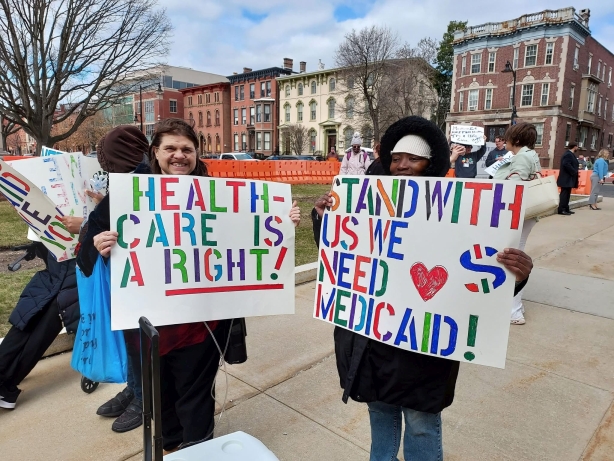
Two Self Advocates hold up signs saying: HEALTH-CARE IS A RIGHT! (Right is underlined) And STAND WITH US WE NEED MEDICAID!

Two Self Advocates hold up signs saying: HEALTH-CARE IS A RIGHT! (Right is underlined) And STAND WITH US WE NEED MEDICAID!

For many people with disabilities, Medicaid goes far beyond health insurance. It provides the services and support that help people live independently, work productive jobs and be active members of their communities.

In New Jersey, Medicaid is provided through NJ FamilyCare, which covers more than 1.8 million residents. Coverage can include critical home- and community-based services, or HCBS, that support independence and help people remain in the places they know and love.

That is why significant changes to Medicaid at the federal level needs our attention.

The federal budget reconciliation law enacted in 2025 includes major changes to Medicaid, some of which will begin affecting NJ FamilyCare members this fall, with additional requirements taking effect January 1, 2027.  That’s when certain adults (ages 19 to 64) will be required to meet new “community engagement” requirements to maintain NJ FamilyCare coverage, which can include working, attending school or volunteering. Many of those members will also need to renew their coverage every six months instead of annually.

Some people with disabilities enrolled through other Medicaid eligibility categories may qualify for an exemption if a disability or serious health condition makes it difficult to meet the requirements.

Even if many people with intellectual and developmental disabilities are not directly affected by the new requirements, the broader changes to Medicaid matter to our entire community.

Medicaid funds HCBS which help people with disabilities to live more independently. In New Jersey, those services include the DDD Supports Program and Community Care Program.

There is also concern about the broader impact that reduced federal Medicaid funding and the increased strain on the system could have on HCBS, eligibility and enrollment, provider reimbursement rates and the direct-support workforce.

At Community Access Unlimited, we know what those services mean in people’s everyday lives. For the people we serve and their families, the most important thing right now is to make sure your contact information with NJ FamilyCare is current, and then watch for letters, emails or texts from either NJ FamilyCare or your health plan, and respond promptly when information is requested. The people we serve should continue to apply for or renew coverage even if they believe the new rules may affect their eligibility.

And there is one particularly simple step that can make a big difference: open your mail. If NJ FamilyCare asks for additional information, respond as soon as possible to help avoid a gap in coverage.

As these changes are implemented, CAU will continue to follow their impact, share important information with the people it serves and their families, and advocate for access to the services and support people with disabilities need to live independently.

There will be more information in the months ahead. For now, stay informed, pay attention to communications about your NJ FamilyCare coverage and ask for help if you are unsure how the changes apply to you.

The Excitement…and Adjustment…of Going Back to School

For a lot of families, September means new backpacks, new schedules and a return to a familiar fall routine. For individuals with disabilities and their families, this time of year can also come with a lot of anxiety.

Change is hard for a lot of kids, but it can be especially hard for children with disabilities who rely on predictable routines to feel safe and confident. A new teacher, a new classroom, a new bus route or a new set of expectations can bring up real anxiety. For a child who has spent the summer with looser days and familiar surroundings, the sudden return to bells, schedules and unfamiliar faces can feel like a lot all at once. It’s easy for many of us to underestimate how much emotional work goes into that adjustment.

It’s why adjustment periods deserve patience. A child who seems more withdrawn, more prone to meltdowns, or more resistant to routine in the first weeks of school shouldn’t automatically be labeled as regressing. They may just be adapting. The families and educators who recognize that, and take it into consideration, tend to see kids do better and have more positive experiences.

And that’s really an important piece of this time of year to remember.  Alongside the adjustment, there’s so much for kids to look forward to. New routines bring new chances to build skills, make new friends and discover things about themselves. What’s better than seeing a child walk into a new classroom nervous and unsure, and within a few weeks, light up talking about a friend they made or a subject they’re suddenly excited about? That shift, from apprehension to genuine enthusiasm, is one of the most rewarding things to witness each fall.

The best thing we can do is make space for both the apprehension and the excitement. A little extra patience in the first few weeks can lay the foundation for real growth in the months that follow.

So if the child in your life seems a little more anxious this time of year, that’s okay. Back-to-school season asks a lot of kids. But it we understand that, it can also give all of us so much to look forward to.

Home Is Where Independence Grows

When people think about independence, they often picture someone doing everything on their own. But that’s not what independence looks like, not for the people we support and not for any of us.

The truth is, none of us achieves independence alone.

We all rely on family, friends, neighbors, technology and our communities in different ways. The support we receive doesn’t make us less independent,  it gives us the confidence and opportunity to make our own choices, pursue our own goals and live the lives we choose. That’s the philosophy that guides our approach to housing at Community Access Unlimited.

For most of us, home is much more than a physical space. It’s where we feel safe. It’s where we celebrate holidays and milestones, share meals with the people we love, and find comfort after a long day. It’s where we build relationships, make memories and simply have the freedom to be ourselves.

Everyone deserves that sense of belonging. Yet for many people with disabilities, finding a home that offers both independence and the right level of support can be a huge challenge. That’s why housing has always been one of the cornerstones of CAU’s mission.

Today, CAU offers nearly 60 residential programs, including group homes, supervised apartments and other supportive living options. Each is designed to meet people where they are, recognizing that independence looks different for everyone.

One of the greatest privileges of my work is witnessing people discover what’s possible when they have a place to call home. I’ve seen individuals arrive at CAU uncertain about what the future might hold. Over time, I’ve watched them discover confidence, make friends, find employment, learn new skills and begin making decisions that shape their own lives.

As the needs of our community continue to evolve, so do we.

Our Emergency Capacity Housing program recently expanded into Scotch Plains and has now supported more than 300 individuals experiencing housing crises. More than 120 of those individuals have chosen to remain part of the CAU community after receiving services, continuing their journey toward greater independence and stability. More importantly, the program has given hundreds of people a safe place to regain stability, reconnect with support, and begin planning for the future.

We’ve also opened two new medical homes through funding provided by the New Jersey Division of Developmental Disabilities after recognizing a critical need for individuals transitioning from nursing homes. These homes allow people to receive the medical support they need while living in a comfortable, home-like environment that promotes dignity, choice and quality of life.

We’re also embracing smart-home technology that gives residents greater control over their daily lives. Voice-activated Alexa devices, automated roller shades and other innovations help people complete everyday tasks more independently, making it easier to navigate their homes with confidence, safety and dignity.

Every new home we open, every thoughtful support we provide, and every innovation we embrace is guided by the same belief that everyone deserves the opportunity to live with dignity, make their own choices and feel at home in their community.

And a home provides so much more than a place to live. It’s a place to belong.

Celebrating 15 Years of Inclusion Through the Arts

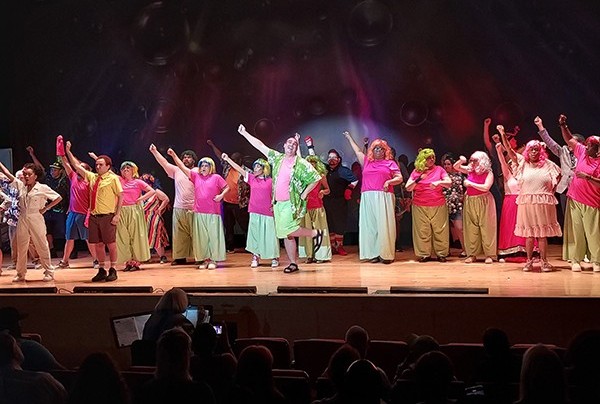
At Community Access Unlimited, we believe everyone deserves the opportunity to express themselves, share their talents, and be part of something bigger than themselves. For the past 15 years, the CAU Community Players have done exactly that.

Each year, our performers take the stage to entertain audiences, and beautifully demonstrate what true inclusion looks like. They build friendships, gain confidence, learn new skills, and discover their own talents.

The arts have a unique ability to bring people together. They create opportunities for self-expression, connection, and personal growth. For many of the people we serve, performing as part of the Community Players is really about being seen, being heard, and being valued for who they are. The stage becomes a place where differences are celebrated and everyone has a role to play.

Over the years, we have watched participants grow in remarkable ways. We have seen individuals step outside their comfort zones, develop new friendships, and experience the pride that comes from working together toward a shared goal. We have also seen audiences leave with a deeper understanding of the power of inclusion and the incredible talents within our community.

As we celebrate the 15th anniversary of the CAU Community Players, we are grateful to the staff, volunteers, families, community partners, and performers who have helped make this program such a success. Their dedication has created opportunities that continue to enrich lives year after year.

We are excited to continue that tradition this summer with Seussical Jr., featuring a cast of more than 60 performers of all abilities. The family-friendly production will take place July 17-19 at the Union County Performing Arts Center in Rahway and celebrates the message that “a person’s a person, no matter how small.”

I hope you will join us as we celebrate 15 years of inclusion, creativity, and community through the arts. For tickets, please click here.

What I Wish More People Understood

Bernadette Griswold

One of the greatest privileges of my career has been the opportunity to work alongside people with intellectual and developmental disabilities. Over the years, the individuals we support at Community Access Unlimited have taught me lessons that go far beyond this work. They’ve shaped the way I view community, leadership, resilience, and even success itself.

There are many things I wish more people understood, but three stand out the most.

First, people with I/DD want the same things we all want: independence, connection, purpose, and the opportunity to be seen for who they are and not for the challenges they face. At CAU, we focus on helping people build full, self-directed lives through housing, employment, education, advocacy, and community inclusion because everyone deserves the chance to participate meaningfully in the world around them.

Second, assumptions can be incredibly limiting. Too often, society underestimates people with disabilities before ever giving them the opportunity to show what they are capable of. I have watched the people we serve become homeowners, advocates, employees, artists, leaders, and mentors. I have seen people exceed expectations simply because someone believed in them and gave them the support and opportunity to succeed.

And finally, inclusion benefits everyone. Creating accessible, welcoming communities improves life for people with disabilities AND strengthens communities as a whole. When people feel respected, valued, and empowered, we all gain from their perspectives, talents, and contributions. That belief has guided CAU since its founding and continues to shape the work we do every day.

Society sometimes identifies the people we support by diagnoses or labels. But they are individuals with goals, personalities, talents, humor, opinions, and dreams. If more people understood that, I truly believe the world would be a more compassionate and inclusive place.